
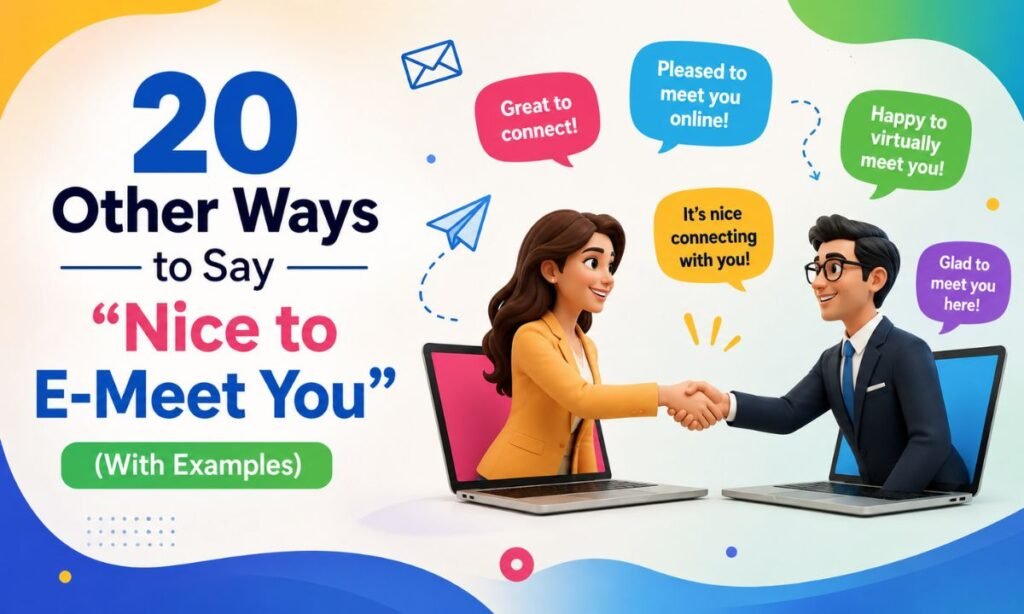
Meeting someone for the first time over email or a video call is now a normal part of work life. But the phrase “nice to e-meet you” has been used so often that it can sound stiff, dated, or even a little awkward. If you want your virtual introductions to feel warmer and more professional, you need a few solid alternatives ready to go.
In this guide, you’ll find 20 natural, professional ways to say “nice to e-meet you,” along with real examples, pros and cons, and tips on picking the right one for any situation.
What Does “Nice to E-Meet You” Mean?
“Nice to e-meet you” is a greeting used when two people connect for the first time through digital means — email, video calls, LinkedIn, or messaging apps — rather than in person. The “e” prefix simply signals that the meeting happened electronically, not face-to-face.
It became especially common during the shift to remote work, when introductions over Zoom or email replaced handshakes and office meetings. The phrase borrows directly from “nice to meet you,” adding the “e-” to clarify the virtual context.
While the intention behind it is friendly and polite, many people find the wording a bit clunky. It tries to do two jobs at once — greet someone and explain the medium — and that can make it feel less smooth than a simple, natural sentence.
Is It Professional or Polite to Say “Nice to E-Meet You”?
Yes, it’s polite, but it’s not always the most professional choice. “Nice to e-meet you” is grammatically informal since “e-meet” isn’t a standard dictionary word. It works fine in casual business emails or quick introductions, but in formal communication — like emails to executives, clients, or new business partners — it can come across as less polished.
Most communication experts suggest reserving it for relaxed, everyday exchanges and switching to more refined alternatives when professionalism matters most. The good news is that plenty of phrases carry the same friendly meaning without the informal edge.
READ THIS “20 Other Ways to Say “I’m Not Feeling Well”
Advantages and Disadvantages of Using “Nice to E-Meet You”
Before deciding whether to keep using this phrase, it helps to weigh what it does well against where it falls short.
Advantages:
- Clear and direct — instantly tells the reader the meeting happened online.
- Widely recognized — most professionals understand the phrase without confusion.
- Quick to write — useful for fast, casual email replies or chat introductions.
- Friendly tone — feels warmer than a flat “hello” or “greetings.”
Disadvantages:
- Not grammatically standard — “e-meet” isn’t a dictionary-recognized verb.
- Can sound outdated — the “e-” prefix trend has faded since the early 2010s.
- Too casual for formal settings — may undercut a professional first impression.
- Overused — many people default to it, making your message sound generic.
Why You Need Alternatives to “Nice to E-Meet You”
Relying on the same phrase every time you meet someone online can make your writing feel repetitive and impersonal. Having a range of alternatives lets you:
- Match your tone to the relationship — formal for clients, casual for peers.
- Stand out in a crowded inbox where everyone writes the same generic greeting.
- Sound more authentic and less like a copy-paste template.
- Adapt to different platforms, whether it’s email, LinkedIn, or a video call.
- Build rapport faster by choosing words that fit the specific context.
Tips for Choosing the Right Phrase
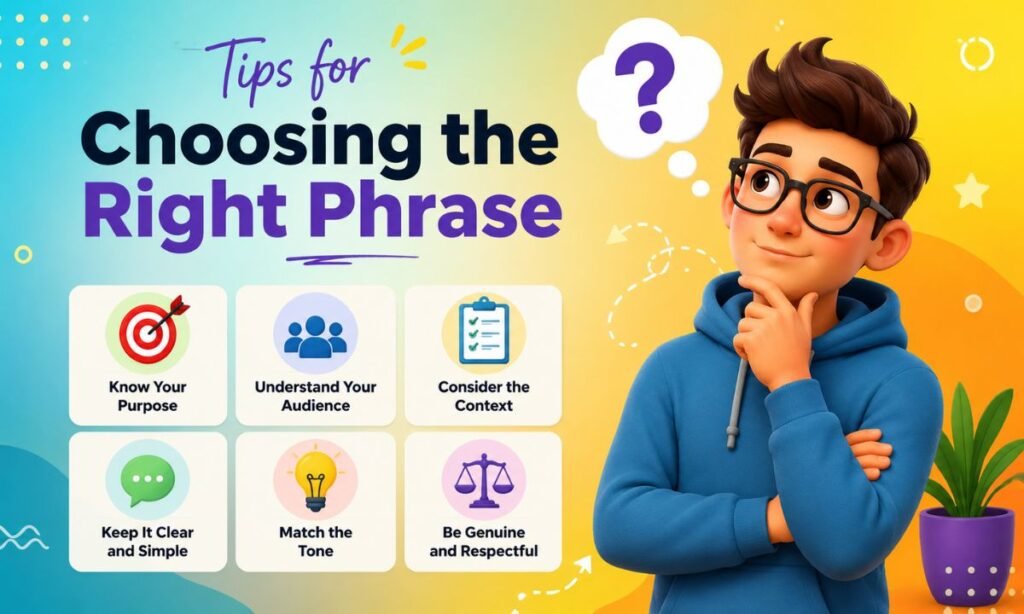
Picking the best greeting isn’t about finding the fanciest words — it’s about fit. Keep these tips in mind:
- Match the formality level. Use polished phrases for clients or executives, and relaxed ones for coworkers or casual networking.
- Consider the platform. Email introductions can be slightly longer; LinkedIn messages and chat apps work better with shorter phrases.
- Add a personal touch. Mention how you connected — a referral, a shared project, or a mutual contact — to make the greeting feel genuine.
- Avoid repeating “e-meet.” If you want to reference the virtual nature of the meeting, try wording it more naturally, such as “connect online” or “meet virtually.”
- Keep it short. A greeting shouldn’t be the longest part of your message — one sentence is usually enough.
- Read it out loud. If a phrase sounds awkward when spoken, it will likely read as unnatural too.
Full List of Alternatives
Here’s a quick-reference table before we go through each phrase in detail.
| # | Phrase | Best For |
|---|---|---|
| 1 | Pleased to Meet You Virtually | Formal emails, client introductions |
| 2 | Great to Connect with You Online | Networking, LinkedIn messages |
| 3 | Happy to Make Your Digital Acquaintance | Semi-formal business intros |
| 4 | Delighted to Meet You Online | Formal, executive-level communication |
| 5 | Pleasure Connecting with You Virtually | Client calls, formal video meetings |
| 6 | Glad to E-Connect with You | Casual team introductions |
| 7 | Nice Connecting with You Online | Everyday professional emails |
| 8 | Wonderful to Meet You Virtually | Warm, relationship-building intros |
| 9 | It’s a Pleasure Meeting You Online | Formal first impressions |
| 10 | Happy to Connect Digitally | Casual to semi-formal messages |
| 11 | Nice to Meet You Through Email | Direct email introductions |
| 12 | Great to Make Your Virtual Acquaintance | Business networking events |
| 13 | Pleased to Be Connected with You | Introductions via a mutual contact |
| 14 | Good to E-Meet You | Quick, informal chat or email |
| 15 | Happy to Meet You in the Digital Space | Modern, tech-forward teams |
| 16 | Delighted to Connect Virtually | Formal client relationships |
| 17 | Nice to Make Your Online Acquaintance | Semi-formal introductions |
| 18 | Great Pleasure Meeting You Virtually | High-formality business emails |
| 19 | Wonderful Connecting with You Online | Warm, appreciative tone |
| 20 | Nice to Be in Touch Virtually | General virtual correspondence |
1. Pleased to Meet You Virtually
This phrase keeps the classic “pleased to meet you” structure while clearly noting the virtual context. It’s a safe, professional choice for emails to clients or new colleagues.
Example: “Pleased to meet you virtually, Sarah — I’ve heard great things about your work on the marketing team.”
2. Great to Connect with You Online
A friendly, modern alternative that works well on LinkedIn or in networking emails. It emphasizes connection rather than just meeting.
Example: “Great to connect with you online! I saw your recent post about supply chain trends and wanted to reach out.”
3. Happy to Make Your Digital Acquaintance
This slightly more formal phrase suits business introductions where you want to sound polished without being stiff.
Example: “Happy to make your digital acquaintance — I understand we’ll be collaborating on the Q3 project.”
4. Delighted to Meet You Online
“Delighted” adds warmth and enthusiasm, making this ideal for first impressions with senior leaders or important clients.
Example: “Delighted to meet you online, Mr. Patel. Thank you for taking the time to join this call.”
5. Pleasure Connecting with You Virtually
A natural way to open a video call or formal email, this phrase feels smooth and professional without sounding forced.
Example: “It’s a pleasure connecting with you virtually today to discuss the partnership details.”
6. Glad to E-Connect with You
If you still want to reference the “e-” style but need something less awkward than “e-meet,” this works as a lighter, more casual option.
Example: “Glad to e-connect with you — looking forward to working together on this campaign.”
7. Nice Connecting with You Online
Simple and versatile, this phrase fits almost any professional email and avoids sounding overly formal or overly casual.
Example: “Nice connecting with you online! Let me know if you have any questions about the proposal.”
8. Wonderful to Meet You Virtually
Use this when you want to convey genuine enthusiasm, especially in relationship-driven fields like sales or client services.
Example: “Wonderful to meet you virtually — I’m excited about the possibility of working together.”
9. It’s a Pleasure Meeting You Online
A strong, formal choice for first-time introductions, especially in emails to new business contacts or interview follow-ups.
Example: “It’s a pleasure meeting you online. Thank you for considering me for this role.”
10. Happy to Connect Digitally
This phrase works well for both internal team introductions and external networking, striking a nice middle ground on formality.
Example: “Happy to connect digitally — I’ll be your main point of contact moving forward.”
11. Nice to Meet You Through Email
Direct and specific, this option clearly states the medium without relying on “e-meet.” It’s ideal for email-only introductions.
Example: “Nice to meet you through email! I wanted to introduce myself before our call next week.”
12. Great to Make Your Virtual Acquaintance
A slightly more formal, polished phrase suited for professional networking or introductions at virtual conferences and events.
Example: “Great to make your virtual acquaintance at today’s webinar — your questions were excellent.”
13. Pleased to Be Connected with You
This phrase works especially well when someone else has introduced you, such as through a mutual colleague or referral.
Example: “Pleased to be connected with you — John mentioned you’re the right person for this inquiry.”
14. Good to E-Meet You
A shorter, more casual twist on the original phrase, useful for quick replies or informal team chats.
Example: “Good to e-meet you! I’ll send over the files we discussed shortly.”
15. Happy to Meet You in the Digital Space
This modern phrase suits tech companies, startups, or teams that embrace a more contemporary tone in their communication.
Example: “Happy to meet you in the digital space — excited to kick off this project together.”
16. Delighted to Connect Virtually
Another strong formal option, this phrase pairs well with introductions involving senior stakeholders or new business partners.
Example: “Delighted to connect virtually and learn more about your team’s goals for this quarter.”
17. Nice to Make Your Online Acquaintance
A slightly formal, classic-sounding phrase that fits well in professional emails without feeling overly stiff.
Example: “Nice to make your online acquaintance — I look forward to our upcoming collaboration.”
18. Great Pleasure Meeting You Virtually
Reserve this for high-formality situations, such as emails to executives or important new clients, where extra courtesy matters.
Example: “It has been a great pleasure meeting you virtually, and I look forward to our next steps.”
19. Wonderful Connecting with You Online
This phrase conveys appreciation and works well after a productive first call or introductory email exchange.
Example: “Wonderful connecting with you online today — thank you for the insightful conversation.”
20. Nice to Be in Touch Virtually
A flexible, general-purpose phrase suitable for ongoing correspondence, not just the very first message.
Example: “Nice to be in touch virtually — I’ll follow up with the requested documents by Friday.”
Frequently Asked Questions
Is “nice to e-meet you” grammatically correct? Not fully — “e-meet” isn’t a standard dictionary word, so the phrase is considered informal rather than incorrect.
Can I use “nice to e-meet you” in a formal email? It’s better to choose a more polished alternative, like “pleased to meet you virtually,” for formal business emails.
What’s a good LinkedIn alternative to “nice to e-meet you”? “Great to connect with you online” works well for LinkedIn messages and networking introductions.
Is it okay to skip mentioning “virtual” or “online” altogether? Yes — a simple “nice to meet you” is perfectly acceptable, even in virtual settings.
What should I say instead in a follow-up video call? Try “pleasure connecting with you virtually” or “wonderful connecting with you online” to sound natural and warm.
Conclusion
“Nice to e-meet you” gets the job done, but it’s far from your only option. Whether you need something formal for a client email, casual for a team chat, or warm for a networking message, there’s a phrase on this list that fits. Swap in these alternatives to make your virtual introductions sound more natural, more professional, and more like you.