

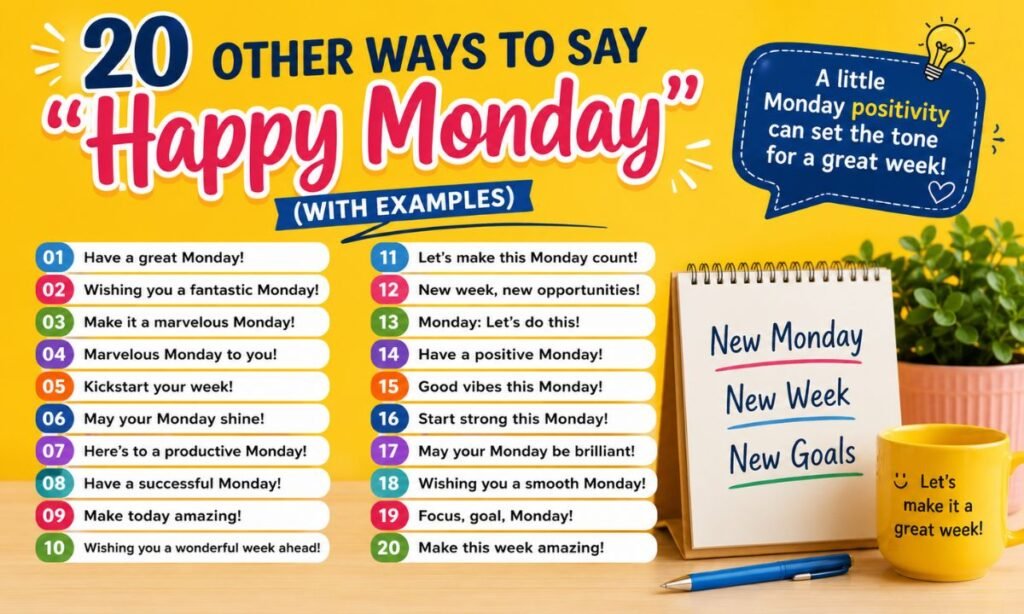
Saying “Happy Monday” on repeat gets old fast, and your coworkers or friends probably notice when you’re stuck on the same greeting week after week. Fresh Monday greetings show a bit more thought and can actually shift the mood of someone’s whole morning.
This guide walks you through what “Happy Monday” really means, whether it’s appropriate to say at work, and gives you 20 alternative Monday greetings with examples so you never run out of things to say.
What Does “Happy Monday” Mean?
“Happy Monday” is a short, friendly greeting people use to kick off the workweek on a positive note. It’s not really about the day itself. It’s about wishing someone a good mood, a smooth start, and maybe a little relief from the usual Monday blues.
You’ll hear it in texts, emails, office chats, and social media captions. It works like “good morning” but with a bit more personality and warmth baked in.
Here’s a quick example: “Happy Monday, team! Let’s make this week count.” Simple, upbeat, and easy to use anywhere.
Is It Professional/Polite to Say “Happy Monday”?
Yes, in most workplaces “Happy Monday” reads as polite and friendly. It fits casual and semi-formal settings just fine, especially in team chats, group emails, or quick check-ins with coworkers you already know.
That said, it can feel a little too casual in very formal emails, legal correspondence, or first contact with a new client. In those cases, a plain “Good morning” or “I hope your week is off to a strong start” plays it safer.
Context matters more than the phrase itself. A startup Slack channel welcomes it. A formal client proposal probably doesn’t need it at all.
Advantages and Disadvantages of Saying “Happy Monday”
Like most greetings, “Happy Monday” has upsides and a few limits worth knowing before you lean on it every week.
| Advantages | Disadvantages |
| Quick and easy to say or type | Can feel repetitive if overused |
| Builds a friendly tone in the workplace | Sounds too casual for formal settings |
| Helps fight the “Monday blues” stereotype | Loses impact when it becomes automatic |
| Works across texts, emails, and social posts | Doesn’t always match a serious or urgent message |
| Costs nothing to add a little positivity | Some people find it a bit cliche by now |
Why You Need Alternatives to “Happy Monday”
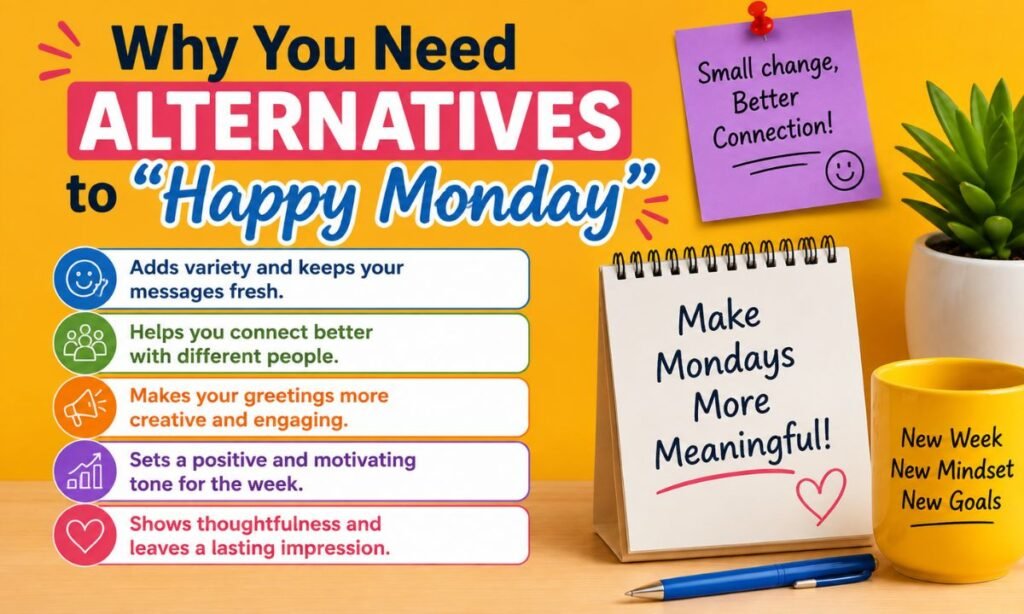
Repeating the same three words every single week starts to feel like autopilot, and people notice when a greeting stops feeling genuine. Swapping it up shows you’re actually paying attention to the person you’re talking to.
Different situations also call for different tones. A motivational Monday message to your sales team needs more energy than a quiet “hope your Monday is peaceful” text to a tired friend.
Having a stack of alternatives ready means you’re never stuck typing the same line out of habit. It also helps you sound more fluent and thoughtful, especially if English isn’t your first language and you want your writing to feel natural.
Tips for Choosing the Right Phrase
Picking the right Monday greeting isn’t complicated once you know what to look for. Here’s what I check before hitting send:
● Know your audience. A boss gets a different tone than a close friend.
● Match the medium. Slack messages can be playful; formal emails should stay polished.
● Read the room. If it’s been a rough week already, skip anything overly cheerful.
● Keep it short. A long, forced greeting can feel awkward or insincere.
● Add a personal touch when you can, like mentioning something specific about their week.
● Stay consistent with your usual tone so the greeting doesn’t feel out of character.
Complete List of Alternatives
Here’s the full list of 20 fresh ways to greet someone on a Monday, each with a quick meaning, tone, and example so you can pick the right one on the spot.
| # | Phrase | Best For |
| 1 | Wishing You a Joyful Monday | Friends, family, warm messages |
| 2 | Have a Relaxing Monday | Someone who needs a slower pace |
| 3 | Enjoy Your Monday | Casual, everyday use |
| 4 | Sunday Blessings to You | Faith-based or evening messages |
| 5 | Have a Fun-Filled Monday | Lighthearted, playful chats |
| 6 | Wishing You Peaceful Moments | Calm, low-key check-ins |
| 7 | Cheers to a Beautiful Monday | Social posts, upbeat texts |
| 8 | Monday Smiles to You | Friendly, short greetings |
| 9 | Have a Restful Monday | Coworkers who seem tired |
| 10 | May Your Monday Shine | Motivational messages |
| 11 | Warm Monday Wishes | Semi-formal emails |
| 12 | Wishing You a Blessed Monday | Spiritual or family contexts |
| 13 | Hope Your Monday is Lovely | Personal, gentle tone |
| 14 | A Joyous Monday to You | Celebratory, upbeat notes |
| 15 | Wishing You a Monday Full of Smiles | Team chats, group messages |
| 16 | Hope You Have a Serene Monday | Quiet, thoughtful check-ins |
| 17 | Monday Cheers to You | Social media, casual texts |
| 18 | May Your Monday Be Wonderful | General all-purpose use |
| 19 | Wishing You a Relaxing Monday Afternoon | Midday messages |
| 20 | Monday Hugs to You | Close friends and family |
1. Wishing You a Joyful Monday
This one leans warm and heartfelt, perfect for people you’re genuinely close to. It carries more emotional weight than a plain “Happy Monday” without sounding over the top.
Meaning: A sincere wish for a good, upbeat day. Tone: Warm, personal, genuine.
Example: “Wishing you a joyful Monday, mom. Call me when you get a break!”
ALSO READ THIS:Apposed vs Opposed: What’s the Difference
2. Have a Relaxing Monday
Not every Monday needs to be high energy, and this phrase acknowledges that. It works great for someone who’s clearly worn out or dealing with a lot.
Meaning: A wish for a calmer, easier start to the week. Tone: Gentle, caring.
Example: “Have a relaxing Monday, you deserve it after last week.”
3. Enjoy Your Monday
Short, simple, and easy to drop into almost any conversation. This is your go-to when you want something quick that still feels friendly.
Meaning: A casual wish for a pleasant day. Tone: Light, easygoing.
Example: “Enjoy your Monday! Coffee’s on me next time we meet up.”
4. Sunday Blessings to You
Slightly different since it’s sent the evening before, this phrase eases someone into the week ahead with a bit of calm. It’s popular in faith-based or family group chats.
Meaning: A kind wish sent ahead of the coming week. Tone: Reflective, sincere.
Example: “Sunday blessings to you and the whole family.”
5. Have a Fun-Filled Monday
If your group chat leans playful, this one fits right in. It’s got more energy than most alternatives and works well for lighthearted friend groups.
Meaning: A wish for an entertaining, upbeat day. Tone: Playful, energetic.
Example: “Have a fun-filled Monday, don’t work too hard!”
6. Wishing You Peaceful Moments
This phrase skips the hype entirely and focuses on calm instead. It’s a solid pick for someone going through a stressful stretch.
Meaning: A wish for a quiet, stress-free day. Tone: Soothing, thoughtful.
Example: “Wishing you peaceful moments today, take it easy.”
7. Cheers to a Beautiful Monday
A little celebratory, this one works great for social media captions or group messages where you want to spread some positivity. It’s got a toast-like feel to it.
Meaning: A cheerful nod to the day ahead. Tone: Bright, celebratory.
Example: “Cheers to a beautiful Monday and a fresh set of goals.”
8. Monday Smiles to You
Short and sweet, this greeting works for quick texts when you don’t want to overthink it. It still lands as thoughtful without taking much effort.
Meaning: A simple wish to brighten someone’s day. Tone: Friendly, casual.
Example: “Monday smiles to you, hope the meeting goes well!”
9. Have a Restful Monday
This one’s for the coworker who clearly needs a slower pace, or anyone recovering from a busy weekend. It shows you noticed without making a big deal of it.
Meaning: A wish for a low-stress, easy day. Tone: Caring, gentle.
Example: “Have a restful Monday after that long trip.”
10. May Your Monday Shine
This phrase brings a bit more motivation into the mix, great for someone starting a big project or a new challenge. It sounds encouraging without being pushy.
Meaning: A wish for a bright, successful start. Tone: Motivational, uplifting.
Example: “May your Monday shine, you’ve got this presentation nailed.”
11. Warm Monday Wishes
This is a solid middle ground between casual and formal, making it a safe pick for semi-professional emails. It sounds polished without feeling stiff.
Meaning: A polite, kind wish for the day. Tone: Warm, professional.
Example: “Warm Monday wishes to the whole team as we kick off the new sprint.”
12. Wishing You a Blessed Monday
Common in faith-based or family circles, this phrase adds a spiritual layer to the greeting. It carries more depth than a standard “Happy Monday.”
Meaning: A heartfelt, spiritual wish for the week. Tone: Sincere, reflective.
Example: “Wishing you a blessed Monday and a peaceful week ahead.”
13. Hope Your Monday is Lovely
Soft and personal, this works well for close friends or anyone you’d want to check in on gently. It reads as genuine rather than automatic.
Meaning: A kind, personal wish for a good day. Tone: Gentle, sincere.
Example: “Hope your Monday is lovely, thinking of you today.”
14. A Joyous Monday to You
This one’s a bit more festive, great for celebrating something small like a promotion or good news landing right at the start of the week. It brings extra energy without overdoing it.
Meaning: An enthusiastic, happy wish for the day. Tone: Celebratory, upbeat.
Example: “A joyous Monday to you, congrats again on the new role!”
15. Wishing You a Monday Full of Smiles
Great for team chats or group messages where you want everyone to feel included. It’s friendly and doesn’t single anyone out.
Meaning: A collective wish for a happy, easy day. Tone: Friendly, inclusive.
Example: “Wishing the whole team a Monday full of smiles as we launch the new project.”
16. Hope You Have a Serene Monday
This phrase leans quiet and calm, perfect for someone who prefers a peaceful start over a hyped one. It’s thoughtful without trying too hard.
Meaning: A wish for a calm, undisturbed day. Tone: Quiet, thoughtful.
Example: “Hope you have a serene Monday before the busy week kicks in.”
17. Monday Cheers to You
Short, snappy, and social-media friendly, this one fits captions and quick posts really well. It’s got a toast-like energy similar to “cheers to a beautiful Monday” but tighter.
Meaning: A brief, cheerful greeting. Tone: Casual, upbeat.
Example: “Monday cheers to you, new week, new wins.”
18. May Your Monday Be Wonderful
This is a solid all-purpose pick that works in almost any setting, casual or semi-formal. It’s simple enough to use without much thought but still sounds sincere.
Meaning: A general, positive wish for the day. Tone: Warm, versatile.
Example: “May your Monday be wonderful and your coffee strong.”
19. Wishing You a Relaxing Monday Afternoon
Perfect for messages sent later in the day, this phrase acknowledges the day is already halfway through. It works well for a midday check-in text.
Meaning: A wish for a calm end to the day. Tone: Gentle, considerate.
Example: “Wishing you a relaxing Monday afternoon after that long call.”
20. Monday Hugs to You
Reserved for close friends and family, this one’s affectionate and personal. It’s not something you’d send a coworker, but it lands well in tight-knit group chats.
Meaning: An affectionate, comforting wish. Tone: Warm, close, personal.
Example: “Monday hugs to you, miss you already!”
How to Personalize Your Monday Greeting
Picking a phrase from the list is step one, but making it feel like you is what actually lands with people. Try adding a small detail about their week, like a project they mentioned or a trip they just took.
Swap in their name or a nickname you already use together. Small personal touches turn a generic greeting into something that feels like it was written just for them.
You can also mix phrases together, like pairing “Wishing you a joyful Monday” with a quick note about the weekend. It only takes a few extra seconds but makes a real difference.
How to Test Which Phrase Works Best
Not every phrase lands the same way with every person, so a little testing helps you figure out what actually works. Try rotating a few different greetings with the same group over a few weeks and watch how people respond.
Pay attention to who replies with more than a quick “thanks” or an emoji. That’s usually a sign the phrase hit the right tone.
Keep a mental shortlist of your top three or four favorites for different situations, like one for close friends, one for coworkers, and one for formal emails. Testing tone this way saves you from guessing every single time.
Building a Habit Around Positive Monday Messages
Sending a thoughtful greeting doesn’t need to be complicated, but making it a habit takes a little intention. Try picking one day a week, like Sunday night, to jot down who you want to message the next morning.
Keep this list handy in your notes app so you’re never scrambling for words at 8am. Over time, people start to notice and even look forward to it, which builds stronger connections at work and at home.
Drop a comment below with your favorite phrase from this list, or share one of your own that didn’t make the cut!
FAQs
Q1. Is “Happy Monday” too casual for work emails?
Not for everyday internal emails, but skip it for formal client communication.
Q2. Can I use the same Monday greeting every week?
Yes, but switching it up keeps your messages feeling fresh and genuine.
Q3. What’s a good formal alternative to “Happy Monday”?
Try “Wishing you a productive start to the week” for formal settings.
Q4. Do Monday greetings actually help workplace morale?
Yes, small positive messages can genuinely lift team mood and energy.
Q5. Should I personalize every Monday greeting I send?
It helps, but even a simple phrase said sincerely still makes an impact.
Final Thoughts
Ditching the same old “Happy Monday” for something more thoughtful takes almost no extra effort but makes a real difference in how your message lands. Whether you’re texting a friend, greeting your team, or writing a quick email, these 20 alternatives give you plenty of room to sound genuine instead of repetitive.
Pick a few favorites from this list, try them out this week, and see which ones actually get a smile back. A little variety goes a long way toward making Mondays feel a bit less dreaded for everyone around you.