

It’s Called vs It Called vs Its Called: The Complete Guide
Many English learners feel confused when using It’s Called vs It Called vs Its Called. These phrases may look similar, but they have different meanings and grammar rules. Knowing the difference can help you write and speak more clearly.
In this guide, we will explain It’s Called vs It Called vs Its Called in simple English. You will learn which form is correct and when to use it. Easy examples will also help you understand each phrase.
By the end, It’s Called vs It Called vs Its Called will be much easier to understand. Let’s explore the grammar, meanings, and common mistakes behind these confusing expressions.
Quick Reference Cheat Sheet: It’s vs Its vs It Called
Short on time? Here’s the answer before you dive deeper.
| Phrase | Meaning | Correct? | Example |
| It’s called | It is called (naming/labeling) | ✅ Correct (most common) | It’s called a hybrid car. |
| It called | The subject performed the action of calling | ✅ Correct (specific context only) | It called me twice this morning. |
| Its called | Missing verb — grammatically broken | ❌ Almost always wrong | Its called a router. (Incorrect) |
The fast rule: If you’re naming or identifying something, use “it’s called.” If a machine, phone, or system actively made a call, use “it called.” Never use “its called” — it’s missing a verb.
The Core Rule: Why “It’s Called” Is Usually Correct
“It’s called” is the phrase you’ll reach for most of the time. It’s the standard way English introduces a name, term, or label for something.
What “it’s” really means
“It’s” is a contraction. The apostrophe stands in for a missing letter, joining two words into one:
- It’s = It is
- It’s = It has (less common, as in “it’s been raining”)
Whenever you see “it’s,” you should be able to expand it back into two words without changing the meaning. If “it is called” makes sense in your sentence, “it’s called” is correct.
Why this structure exists
English needs a simple way to introduce names and terms without pointing to who created them. “It’s called” lets a speaker label something — an object, a place, an idea — without needing to know or mention the source of the name. That’s exactly why the phrase shows up constantly in explanations, definitions, and descriptions.
Why “it’s called” works grammatically
Break the sentence down:
- It — subject pronoun
- ‘s (is) — helping verb
- called — past participle acting as the main verb
Together, these three parts form a complete, grammatically sound sentence. Nothing is missing. That’s the entire reason “it’s called” reads naturally while its cousins sometimes don’t.
Examples:
- It’s called a smartphone.
- It’s called the Renaissance.
- It’s called photosynthesis.
ALSO READ THIS:Itself vs Its Self: Correctly in English Grammar (Updated 2026)
Why “It Called” Sounds Wrong (Most of the Time)
“It called” isn’t automatically incorrect — but it means something completely different from “it’s called,” and using it in the wrong context creates confusion.
Missing helping verb problem
When people write “it called” while trying to name something, they’re accidentally dropping the helping verb “is.” The sentence “It called a router” doesn’t explain what something is named — it suggests the router itself picked up a phone and dialed a number. That’s rarely the intended meaning.
What “it called” actually means (rare cases)
“It called” is the simple past tense of the verb “to call.” It’s correct when something — a phone, a machine, a system, an animal — genuinely performed the act of calling.
- It called me at midnight.
- The alarm system called the police.
- It called out from across the yard.
In these sentences, “it” is the one doing the calling. There’s no missing word and no confusion, because the sentence describes an action, not a name.
Technology exception
This is where “it called” shows up most naturally in modern writing. Apps, devices, and automated systems genuinely “call” things — an API, a phone number, a function.
- The app called the server for updates.
- It called the backend function twice.
- The system called customer support automatically.
In these technical contexts, “it called” is completely correct because a real action is taking place.
The Possessive Pronoun “Its” (No Apostrophe Rule)
“Its” behaves differently from “it’s,” and understanding why clears up most of the confusion around this whole topic.
Why “its” has no apostrophe
“Its” is a possessive pronoun. It shows that something belongs to “it,” the same way “his,” “her,” “their,” and “our” show ownership.
- The dog wagged its tail.
- The company raised its prices.
- The car lost its value.
None of these possessive pronouns — his, hers, its, theirs — use an apostrophe. “Its” simply follows the same pattern.
Why English breaks its own apostrophe pattern
Normally, apostrophes signal possession: “the dog’s bone,” “Sarah’s car.” So it feels natural to assume “its” should follow suit. But “its” is an exception, grouped with pronouns like “his” and “hers” rather than with nouns like “dog” or “Sarah.” That’s the entire source of the confusion — and once you see the pattern, it’s hard to unsee.
Correct examples of “its”
- The bird built its nest in the tree.
- The team celebrated its victory.
- The software updated its settings automatically.
Each sentence shows ownership or association — never a contraction of “it is.”
Why “Its Called” Is Usually Incorrect
“Its called” is the version that causes the most trouble, because it looks like a small, harmless typo but actually breaks the sentence.
Missing verb structure
“Its called” tries to combine a possessive pronoun (“its”) directly with a past participle (“called”), skipping the verb “is” entirely. Without that verb, the sentence has no way to link the subject to the label that follows.
- ❌ Its called a laptop.
- ✅ It’s called a laptop.
Why it happens so often
Spoken English compresses “it’s called” into a fast, single sound. When people type quickly, their fingers often default to “its” because it’s the more familiar spelling in other contexts (its color, its shape). The apostrophe simply gets lost in the rush.
Real-world frequency
Apostrophe errors are among the most common mistakes in casual digital writing — texts, social posts, comments, and quick emails. “Its called” is one of the most frequent offenders, largely because autocorrect doesn’t always catch it and the error doesn’t visually “look” wrong at a glance.
Grammar Deep Dive: Contractions vs Possessives
To really lock this in, it helps to see contractions and possessives side by side.
The apostrophe trap
Apostrophes usually mean one of two things in English: possession (“Maria’s book”) or a missing letter (“don’t” for “do not”). “It’s” and “its” fall into different camps — “it’s” is always a contraction, “its” is always possessive — which is exactly why they’re so easy to mix up.
Comparison table
| Word | Function | Expands to | Example |
| It’s | Contraction | It is / It has | It’s raining outside. |
| Its | Possessive pronoun | (no expansion) | The cat licked its paw. |
| It called | Subject + past-tense verb | (no contraction) | It called twice yesterday. |
| Its called | Broken phrase | Missing “is” | ❌ Incorrect in almost all cases |
Quick test: Replace the word with “it is.” If the sentence still makes sense, use “it’s.” If not, use “its.”
Why “It’s Called” Uses Passive Voice
Naming something is one of the few situations where passive voice is not just acceptable — it’s preferred.
What passive voice means
In an active sentence, the subject performs the action: “People call it a smartphone.” In a passive sentence, the subject receives the action instead: “It’s called a smartphone.” The doer of the action (people, scientists, the inventor) is left out because it usually doesn’t matter.
Why naming uses passive structure
When you introduce a term or label, the point isn’t who assigned that name — it’s what the thing is called. Passive voice lets the sentence focus entirely on the object and its name, which is exactly what a definition needs.
- Active: Scientists call it gravity.
- Passive: It’s called gravity.
Both are correct, but “it’s called” is shorter, more natural, and puts the focus where readers expect it.
Real-World Usage Examples
Seeing these phrases in different settings makes the rules easier to apply.
Everyday conversation
- What’s it called again? I forgot the name.
- It’s called a French press — you use it to make coffee.
- My phone called me by accident while it was in my pocket.
Business context
- The new pricing model is called value-based billing.
- It’s called a service-level agreement, or SLA for short.
- The system called our support line to flag an outage.
Academic context
- This phenomenon is called cognitive dissonance.
- It’s called the scientific method for a reason.
- The process by which plants convert light into energy is called photosynthesis.
Technology context
- It’s called an API — it lets two systems talk to each other.
- The app called the server three times before it connected.
- It’s called cloud computing because the data lives off-site.
Case Study: How One Apostrophe Changes Meaning
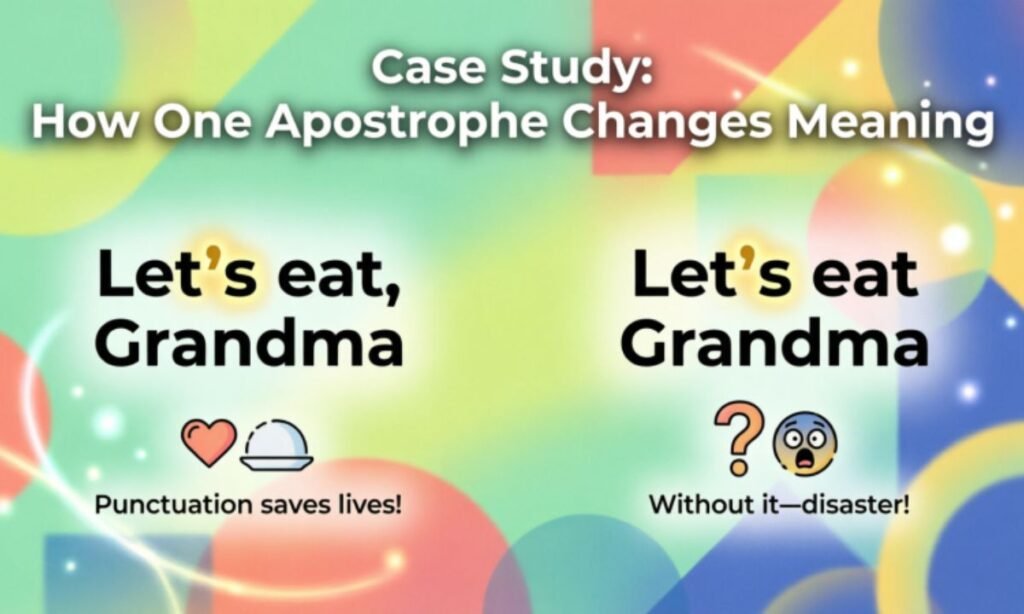
Small punctuation mistakes can carry real consequences, especially in professional settings.
Email mistake example
Imagine a support agent writes: “Its called a firmware update, and it called the device automatically.” The first half is missing its verb, so it reads as unfinished or careless. A customer skimming the message may not consciously notice the apostrophe error, but the sentence still feels slightly “off,” which chips away at credibility.
Impact
In marketing copy, technical documentation, or client-facing emails, small grammar slips like “its called” can quietly undermine trust. Readers may not be able to name the exact mistake, but polished writing reads as more professional, and error-filled writing reads as rushed — even when the actual content is accurate.
Common Mistakes Writers Make
Confusing “it’s” and “its”
This is the root of almost every error in this topic. The fix is simple: mentally expand “it’s” into “it is” before you commit to using the apostrophe.
Using “its called”
Writers often type “its called” out of habit because “its” already feels correct in possessive contexts (its color, its size). The missing verb goes unnoticed because the phrase still sounds fine out loud.
Overcorrecting apostrophes
Some writers, after learning about the it’s/its rule, start second-guessing every apostrophe — even adding one where it doesn’t belong, like “its'” (which isn’t a real word in any context).
Ignoring sentence context
“It called” and “it’s called” mean completely different things. Choosing the wrong one isn’t just a punctuation issue — it can genuinely confuse the reader about what the sentence is trying to say.
Decision Framework: Choose the Right Form in 3 Seconds
Use this three-step check any time you’re unsure.
Step 1: Expand the contraction
Try replacing the word with “it is.” If the sentence still makes sense, you need the apostrophe: “it’s.”
Step 2: Check possession
Does the sentence show something belonging to “it” (its color, its shape, its price)? If yes, use “its” — no apostrophe.
Step 3: Check verb structure
Is something performing the act of calling — a phone, a system, a person? If yes, “it called” is correct. If you’re naming or labeling something, you need the helping verb: “it’s called.”
Visual Grammar Guide (Simple Logic Flow)
- Are you naming or labeling something? → Yes: Use “it’s called.” → No: Go to step 2.
- Is something showing possession or ownership? → Yes: Use “its” (no apostrophe). → No: Go to step 3.
- Did something perform the action of calling? → Yes: Use “it called.” → No: Recheck your sentence — you may need “it’s called” after all.
Memory Tricks That Actually Work
The apostrophe test
If you can swap the word for “it is” and the sentence still makes sense, keep the apostrophe. If it sounds wrong, drop it.
The possession test
Compare “its” to “his” or “hers.” None of these possessive pronouns take an apostrophe — “its” is no exception.
Quick visual trick
Picture the apostrophe as a tiny stand-in for a missing letter. No missing letter, no apostrophe. Possession never needs one.
Formal vs Informal Writing Usage
Informal writing
In texts, social posts, and casual emails, contractions like “it’s called” are completely standard and expected. Writing “it is called” in a text message would feel stiff and overly formal.
Formal writing
Academic papers and some formal business documents often avoid contractions altogether, preferring the fully expanded “it is called” for a more polished tone. This is a style preference, not a grammar requirement.
Key difference
| Setting | Preferred Form | Example |
| Texting/chat | It’s called | It’s called burnout, honestly. |
| Blog/marketing copy | It’s called | It’s called smart pricing. |
| Academic paper | It is called | This effect is is called the placebo response. |
| Technical documentation | Either, based on context | It’s called caching. / The script called the function. |
Practice Sentences
Fill in the blank
- The dessert ___ tiramisu. (it’s called / its called / it called)
- The phone ___ three times before I answered. (it’s called / it called)
- The cat curled up on ___ favorite blanket. (it’s / its)
- ___ raining again — grab an umbrella. (It’s / Its)
- The app ___ the API to fetch new data. (it’s called / it called)
Answers
- It’s called tiramisu.
- It called three times before I answered.
- The cat curled up on its favorite blanket.
- It’s raining again — grab an umbrella.
- The app called the API to fetch new data.
Expert Insight: Why This Mistake Persists
This confusion isn’t a sign of poor intelligence or careless writing — it’s a byproduct of how English works. Spoken language compresses “it is called” into a fast, single sound that’s indistinguishable from “its called.” Your ear can’t tell the difference, so your fingers sometimes default to the wrong spelling on the page. Add in the fact that “its” is genuinely correct in other, very similar-looking contexts (its color, its size), and the mix-up becomes almost automatic. The fix isn’t memorizing more rules — it’s building the habit of pausing for one second to run the “it is” substitution test before you hit send.
Quick Reference Tables
It’s vs Its vs It Called
| Form | Part of Speech | Use Case | Correct Example | Incorrect Example |
| It’s | Contraction (it is/has) | Naming, describing, stating a fact | It’s called a violin. | — |
| Its | Possessive pronoun | Showing ownership | The bird spread its wings. | Its’ wings (never valid) |
| It called | Pronoun + past-tense verb | Describing a past action | It called the office yesterday. | — |
| Its called | Broken/incomplete phrase | Never intentional | — | Its called a bug fix. |
Final Verdict: It’s Called vs It Called vs Its Called
Here’s the simple takeaway: use “it’s called” whenever you’re naming, labeling, or defining something — it’s the correct, contraction-based form that covers the vast majority of everyday sentences. Reach for “it called” only when something genuinely performed the act of calling, like a phone, app, or automated system. And avoid “its called” entirely — it’s missing a verb and is never the right choice for naming something.
Run the “it is” substitution test whenever you’re unsure, and this mistake will stop showing up in your writing for good.
Frequently Asked Questions
1. Is “it’s called” or “its called” correct?
“It’s called” is correct. “Its called” is missing the verb “is” and is grammatically incomplete.
2. Can “it called” ever be correct?
Yes — when something actually performed the act of calling, like a phone or an automated system.
3. Why doesn’t “its” have an apostrophe?
Because it’s a possessive pronoun, like “his” or “hers,” and possessive pronouns never take apostrophes.
4. Is “its'” ever a real word? No.
“Its'” is not correct in any context — it’s a common typo, not a valid form.
5. How can I quickly check which form to use?
Try replacing the word with “it is.” If the sentence still makes sense, use “it’s.”
6. Is it okay to use “it’s called” in formal writing?
Yes, though some academic styles prefer the fully expanded “it is called” for a more formal tone.
1 thought on “It’s Called vs It Called vs Its Called: The Complete Guide”