
You just read an email, a text, or a Slack message, and you want to reply fast. “Got it, thank you” pops into your head every single time. It works, sure. But typing the same line over and over gets old, and honestly, it can start to feel flat.
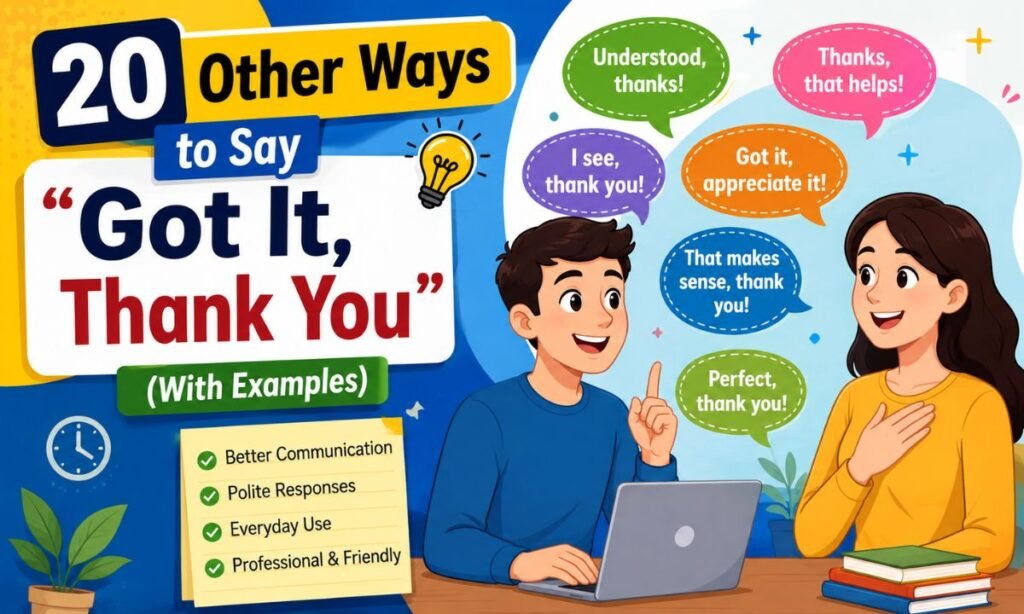
This guide gives you 20 fresh alternatives to “got it, thank you,” plus tips on picking the right one for the moment. By the end, you’ll have a whole toolkit of phrases for emails, texts, and everyday chats that sound natural, not robotic.
What Does “Got It, Thank You” Mean?
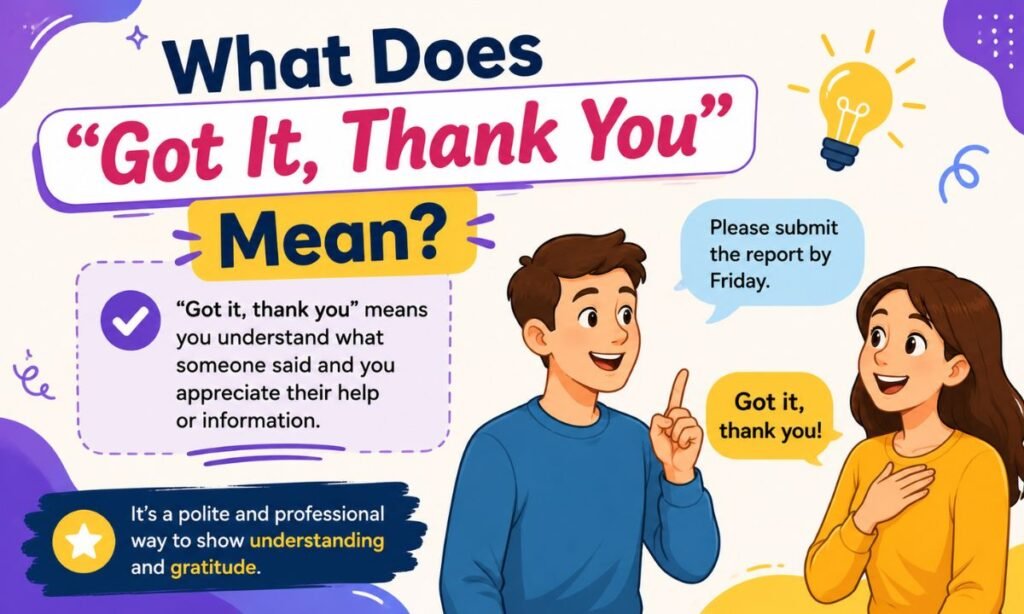
“Got it, thank you” is a short way to tell someone two things at once: you received their message, and you’re grateful for it. It’s a quick acknowledgment phrase, nothing more, nothing less.
People use it after getting instructions, an update, a file, or an answer to a question. It says “I understood you” and “I appreciate this” in five words.
Here’s the catch. Because it’s so short, it can sound a little bland if you use it in every single reply. That’s really the whole reason this list exists.
You’ll see this phrase everywhere, from quick text replies to formal business email threads. It’s flexible, but that flexibility is also why it can start to feel like autopilot after a while.
Is It Professional/Polite to Say “Got It, Thank You”?
Yes, it’s both polite and professional in most situations. It’s clear, it’s respectful, and nobody is going to be offended by it.
That said, context matters. In a casual Slack thread with your team, it fits right in. In a formal email to a new client or a senior executive, it might read as a bit too brief.
Think of it like a handshake. A regular handshake works almost everywhere. But sometimes the moment calls for something warmer or more detailed, like a two-handed shake or a genuine “thanks so much.”
A good rule of thumb: if the sender wrote you three paragraphs of careful explanation, a five-word reply can feel a little dismissive, even if that’s not your intent.
ALSO READ THIS:20 Other Ways to Say “The Author States” (With Examples)
Advantages and Disadvantages
Before jumping into alternatives, it helps to know what you’re working with. Here’s a quick breakdown of when “got it, thank you” works well and when it might fall short.
Advantages
● Quick to type and easy to read
● Works in almost any setting, from texts to work emails
● Shows both understanding and gratitude in one line
● Feels friendly without sounding overdone
● Universally understood, even by non-native English speakers
● Keeps conversations moving without unnecessary delay
Disadvantages
● Can feel repetitive if you use it constantly
● Might come across as too casual for formal business emails
● Doesn’t show much personality or warmth
● Can feel a bit robotic in longer, relationship-building conversations
● Doesn’t always match the tone of more serious or detailed messages
● Offers no room to acknowledge extra effort someone put into helping you
Why You Need Alternatives to “Got It, Thank You”
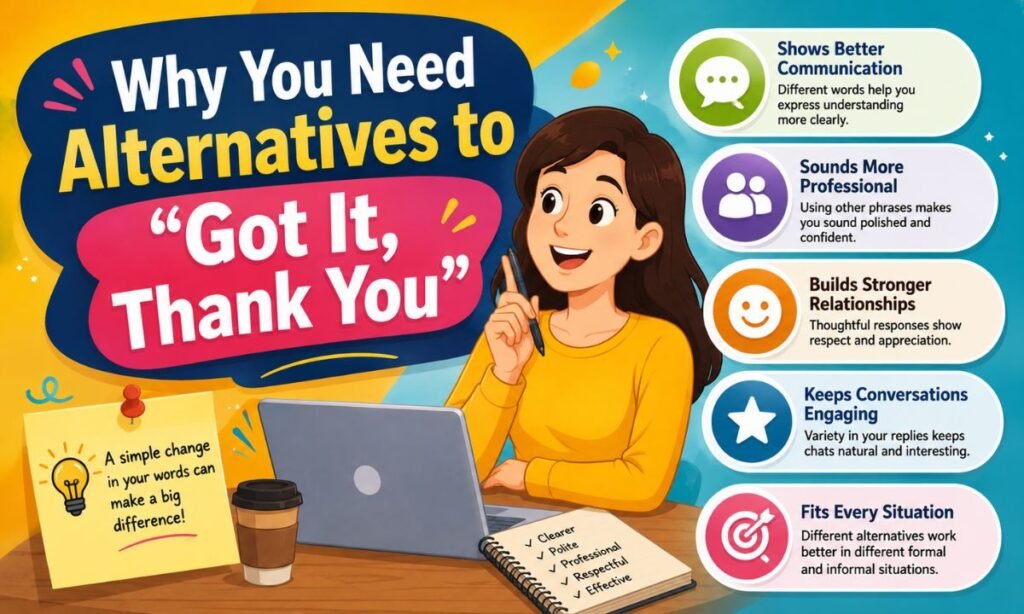
Here’s something I’ve noticed after years of writing emails at work: people remember how you make them feel, not just what you say. A varied vocabulary makes your communication style feel more thoughtful.
Alternatives also let you match your tone to the situation. A client update calls for something more polished than a quick text to a coworker.
And honestly, switching things up keeps your writing from sounding like a copy-paste template. It shows the person on the other end that you actually read what they sent, rather than firing off the same stock reply.
Over time, these small word choices shape how coworkers and clients see you. Someone who varies their language a little tends to come across as more attentive and easier to work with.
Tips for Choosing the Right Phrase
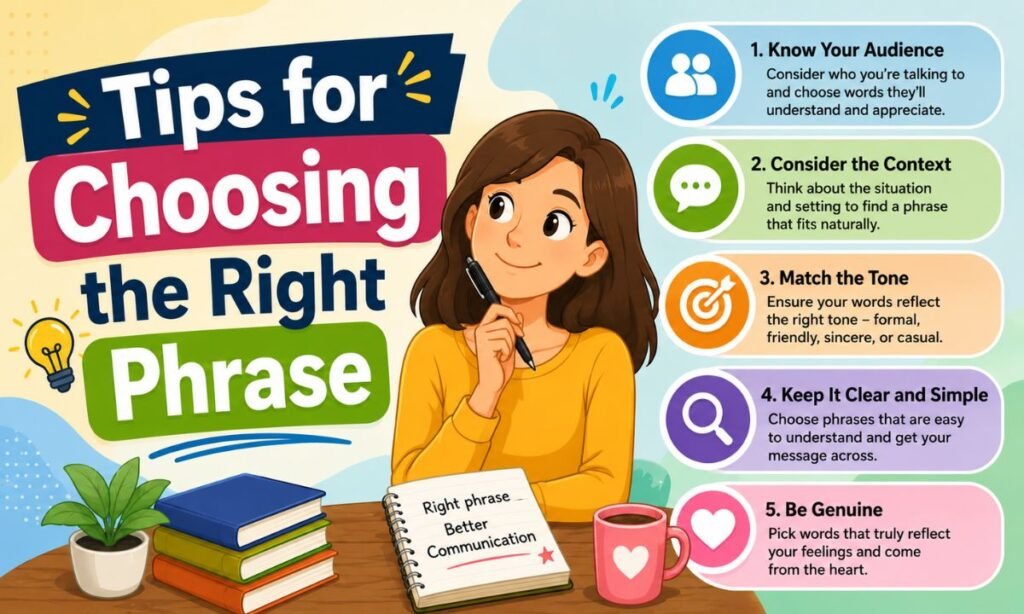
Picking the right alternative isn’t complicated once you know what to look for. Keep these points in mind:
● Match the formality of the original message. A casual text gets a casual reply.
● Think about your relationship with the sender, whether it’s a boss, client, or friend.
● Consider the platform. Email allows a bit more warmth than a quick chat app message.
● Read the emotional tone. If someone went out of their way to help, add extra appreciation.
● Keep it short when the moment calls for a fast reply, and expand when the situation deserves more detail.
● Avoid repeating the same phrase in back-to-back messages with the same person.
● Pair it with a next step when you can, so the reply feels active instead of passive.
Below are 20 practical alternatives to “got it, thank you,” each with a meaning, an example, and a note on when it fits best.
1. Understood, Thanks
This is one of the most professional alternatives on this list. It confirms comprehension without extra words attached.
Example: “Understood, thanks. I’ll update the report by Friday.”
Use this one for workplace communication, especially with managers or clients who prefer short, direct replies. It works particularly well when instructions come with a deadline attached.
2. Thanks, I Understand
Flipping the order changes the feel slightly. This version leads with gratitude before confirming comprehension.
Example: “Thanks, I understand the new process now.”
It works well after someone explains something a little complicated, like a policy change or a new procedure. Leading with thanks also softens the reply if the explanation took several tries.
3. Noted, Thank You
“Noted” has a businesslike ring to it, which makes this phrase great for formal emails. It signals that you’ve logged the information mentally.
Example: “Noted, thank you. I’ll make sure the team follows the updated schedule.”
This one shines in project management threads or when receiving instructions from higher-ups. It also works well in written records where you want a clear paper trail.
4. Got It, Much Appreciated
This keeps the familiar “got it” opener but swaps the ending for something warmer. It adds a touch of genuine appreciation.
Example: “Got it, much appreciated. This really helps clear things up.”
Good for semi-formal chats with coworkers or vendors who went out of their way to help. It’s a natural upgrade when you want to stay close to your usual phrasing.
5. I Appreciate It
Short, warm, and personal. This phrase leans more into gratitude than confirmation of understanding.
Example: “I appreciate it. I’ll get started right away.”
Use it when someone does you a favor or offers extra help beyond what was asked. It reads as sincere without sounding overly formal.
6. Thanks for Letting Me Know
This alternative works especially well for updates, heads-ups, or notifications rather than instructions.
Example: “Thanks for letting me know about the schedule change.”
It’s a natural fit for team communication, especially in fast-moving group chats or company announcements. It also works nicely for personal messages, like a friend telling you about a plan change.
7. Crystal Clear, Thanks
This one adds a bit of personality while still confirming full comprehension. It suggests there’s zero confusion left.
Example: “Crystal clear, thanks. I’ll follow those steps exactly.”
Best used after detailed instructions, like a tutorial, a how-to guide, or a technical explanation. It reassures the sender that their effort explaining things actually paid off.
8. All Clear, Thank You
Similar to the phrase above but slightly more formal. “All clear” is often used in operational or logistics-heavy contexts.
Example: “All clear, thank you. We’re ready to move forward with the plan.”
It fits nicely in project updates, event planning threads, or team coordination emails. Teams that manage several moving parts tend to use this one a lot.
9. That Makes Sense, Thanks
This phrase shows that the explanation actually clicked for you. It’s more conversational than “understood.”
Example: “That makes sense, thanks for breaking it down for me.”
Great for moments when someone clarifies something confusing, like a billing issue or a technical error. It also works well in customer support conversations.
10. I’ve Got the Picture, Thanks
A friendly, slightly informal way to say you now fully understand the situation. It works well in casual conversations.
Example: “I’ve got the picture, thanks for walking me through it.”
Save this one for coworkers or friends rather than formal client emails. It’s a nice fit after a screen-share or a longer verbal explanation.
11. Thanks, That’s Clear
Short and to the point, this phrase confirms clarity without any extra fluff. It’s efficient for quick replies.
Example: “Thanks, that’s clear. I’ll send the files over shortly.”
Perfect for busy workdays when you need to reply fast but still sound polite. It keeps the conversation moving without slowing things down.
12. Much Obliged
A slightly old-fashioned but still charming phrase. “Much obliged” leans formal and adds a hint of traditional courtesy.
Example: “Much obliged for your quick response on this.”
Use it sparingly, maybe with clients who appreciate a more traditional or courteous tone. It can stand out in a good way when everyone else is writing the same generic replies.
13. I See, Thank You
This phrase works well when someone explains a reason behind a decision or a change. It shows genuine understanding.
Example: “I see, thank you for explaining the reasoning behind the delay.”
It fits conversations where the “why” matters just as much as the “what.” Use it when you want the sender to know their explanation actually mattered to you.
14. Gotcha, Thanks
Casual and upbeat, this is a go-to for texts and instant messages. It’s the friendliest option on this list.
Example: “Gotcha, thanks! I’ll handle it this afternoon.”
Stick to informal settings, like a group chat with close coworkers or friends. It’s not the phrase to reach for in a first email to a new client.
15. Perfect, Thank You
This phrase adds a bit of enthusiasm, showing that the information was exactly what you needed. It feels upbeat and positive.
Example: “Perfect, thank you. That’s exactly the detail I was missing.”
Use it when someone answers a question you’d been waiting on, especially in customer service settings. It leaves the sender feeling like their answer genuinely helped.
16. Thanks, Noted with Appreciation
A slightly longer, more formal version of “noted, thank you.” It works well in written correspondence where tone matters a lot.
Example: “Thanks, noted with appreciation. I’ll adjust the timeline accordingly.”
Best for client-facing emails or communication with senior leadership. It signals both professionalism and warmth at the same time.
17. Understood Completely, Thanks
Adding “completely” removes any doubt about your comprehension. This phrase reassures the sender that nothing was missed.
Example: “Understood completely, thanks for the detailed breakdown.”
Great after a long explanation or a set of multi-step instructions. It’s especially useful when the topic is technical or easy to misread.
18. Thanks, I’ll Take It from Here
This phrase does double duty. It thanks the sender and signals that you’re now taking ownership of the task.
Example: “Thanks, I’ll take it from here. I’ll update you once it’s done.”
Useful when a project or task is being handed off from one person to another. It reassures the sender that they don’t need to follow up.
19. Appreciate the Info
A shorter, more casual cousin of “I appreciate it.” This version fits quick replies where formality isn’t needed.
Example: “Appreciate the info, that helps a lot with planning.”
Good for internal team chats, quick check-ins, or Slack threads. It works especially well when someone shares data or a quick fact you needed.
20. Thanks, That Helps a Lot
This phrase highlights the actual value of what someone shared. It goes beyond a simple acknowledgment.
Example: “Thanks, that helps a lot. I was stuck on that part.”
Use it when someone’s answer genuinely solves a problem or fills a gap in your understanding. It’s a great way to make someone feel like their help actually mattered.
Quick Reference Table
| Phrase | Tone | Best For |
| Understood, Thanks | Formal | Manager or client instructions |
| Thanks, I Understand | Neutral | Explaining a new process |
| Noted, Thank You | Formal | Project updates |
| Got It, Much Appreciated | Semi-formal | Coworker help |
| I Appreciate It | Warm | Favors and extra effort |
| Thanks for Letting Me Know | Neutral | Updates and heads-up messages |
| Crystal Clear, Thanks | Friendly | Detailed instructions |
| All Clear, Thank You | Formal | Logistics and planning |
| That Makes Sense, Thanks | Casual | Clarifications |
| I’ve Got the Picture, Thanks | Casual | Friendly chats |
| Thanks, That’s Clear | Neutral | Quick replies |
| Much Obliged | Formal | Traditional clients |
| I See, Thank You | Neutral | Explaining reasons |
| Gotcha, Thanks | Casual | Texts and group chats |
| Perfect, Thank You | Upbeat | Customer service |
| Thanks, Noted with Appreciation | Formal | Senior leadership |
| Understood Completely, Thanks | Formal | Multi-step instructions |
| Thanks, I’ll Take It from Here | Neutral | Task handoffs |
| Appreciate the Info | Casual | Internal team chats |
| Thanks, That Helps a Lot | Warm | Problem-solving replies |
Common Mistakes to Avoid When Acknowledging Messages
Even with a big list of alternatives, a few habits can undercut a good reply. Watch out for these:
● Using the same phrase every time. It starts to feel automatic instead of genuine.
● Being too casual with senior contacts. Save “Gotcha, thanks” for people you know well.
● Skipping the “thank you” entirely. A bare “got it” or “noted” alone can feel cold, especially in email.
● Overloading the reply with extra words. A three-sentence acknowledgment for a one-line message can feel excessive.
● Ignoring the channel. A phrase that fits a text might feel out of place in a formal PDF report or letter.
Small adjustments like these keep your replies feeling intentional rather than automatic.
How to Personalize These Phrases for Yourself
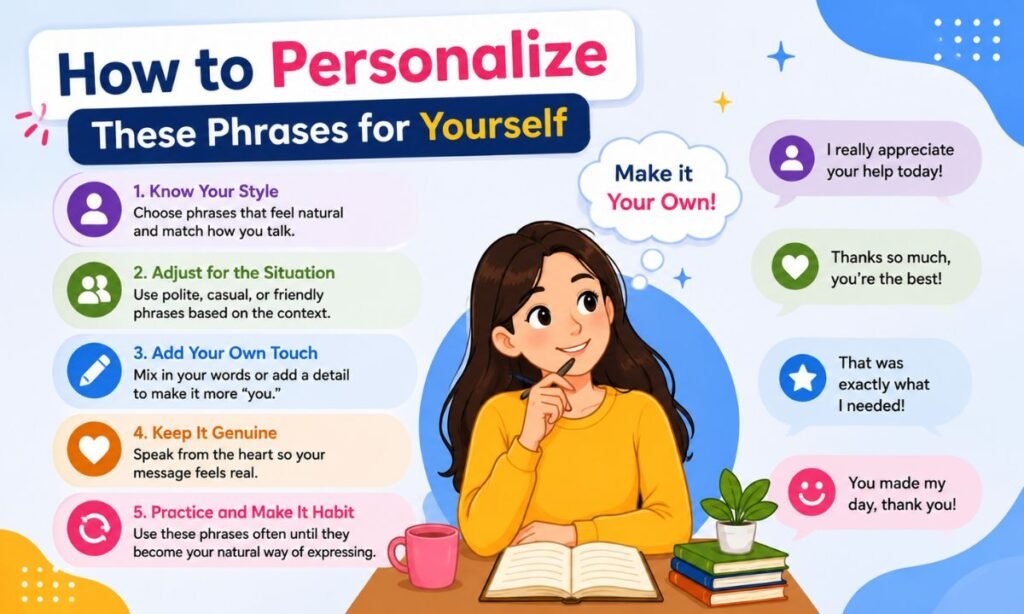
Reading a list is one thing. Making these phrases feel like *your* voice is another. A few small tweaks can help.
● Add a name. “Understood, thanks, Sarah” feels more personal than the phrase alone.
● Attach a next step. Pair the phrase with what you’ll do next, like “Noted, thank you, I’ll send the draft by noon.”
● Match your usual style. If you’re naturally upbeat, lean toward phrases like “Perfect, thank you.” If you’re more reserved, “Understood, thanks” fits better.
● Rotate your favorites. Pick three or four you genuinely like and swap between them so replies don’t feel scripted.
● Read it out loud. If it sounds like something you’d actually say, it’s the right pick.
Try mixing a couple of these into your replies today and see which ones feel most like you. 😊
Real-Life Scenarios: Seeing the Phrases in Action
Sometimes it’s easier to pick the right phrase when you see it inside a real exchange. Here are three quick scenarios.
Scenario 1: A manager sends new deadline instructions.
Manager: “Please have the draft ready by Thursday instead of Friday.”
Reply: “Understood, thanks. I’ll adjust my schedule and have it ready by Thursday.”
This keeps things professional while confirming the new deadline clearly.
Scenario 2: A coworker explains a confusing spreadsheet formula.
Coworker: “The formula pulls last month’s totals automatically, so you don’t need to update it manually.”
Reply: “That makes sense, thanks for breaking it down for me.”
This shows the explanation actually landed, not just that you skimmed it.
Scenario 3: A friend texts about a last-minute plan change.
Friend: “Hey, we moved dinner to 7 instead of 6.”
Reply: “Gotcha, thanks! See you then.”
Short, casual, and perfectly suited for a quick text exchange.
Notice how the tone shifts with each situation. That’s really the whole skill behind choosing the right acknowledgment phrase, matching your words to the moment instead of defaulting to the same line every time.
Alternatives by Communication Channel
Different platforms call for different levels of formality. Here’s a simple way to think about it:
| Channel | Suggested Tone | Example Phrase |
| Formal email | Polished, professional | Noted, Thank You |
| Team chat (Slack, Teams) | Friendly, efficient | Appreciate the Info |
| Text message | Casual, warm | Gotcha, Thanks |
| Client correspondence | Respectful, clear | Thanks, Noted with Appreciation |
| Customer support reply | Positive, reassuring | Perfect, Thank You |
Keeping this rough guide in mind saves you from overthinking every single reply. Once you get a feel for it, choosing the right phrase becomes second nature.
Frequently Asked Questions
Is “got it, thank you” grammatically correct?
Yes, it’s a short, correct way to acknowledge information and show gratitude.
Can I use “got it, thank you” with my boss?
Yes, though a slightly more formal option like “Understood, thanks” may fit better for formal requests.
What’s a more casual way to say “got it, thank you”?
Try “Gotcha, thanks” or “Appreciate the info” for relaxed conversations.
What’s the most formal alternative on this list?
“Much Obliged” and “Noted, Thank You” both lean formal and work well in client emails.
Should I change my phrase every time I reply?
Not necessary, but rotating a few favorites keeps your replies from feeling repetitive.
Is it rude to just say “got it” without “thank you”?
It’s not rude, but adding “thank you” makes the reply warmer and more polite.
Can these phrases work in text messages, not just email?
Yes, most of the casual options, like “Gotcha, thanks” or “That makes sense, thanks,” fit texts perfectly.
Final Thoughts
“Got it, thank you” gets the job done, but it’s not the only option in your toolkit. With 20 alternatives to choose from, you can match your tone to the moment, whether that’s a quick text, a formal email, or a warm reply to a coworker who helped you out.
Try picking two or three phrases from this list that feel like you, and start swapping them into your daily replies. Small changes like this make your communication feel more genuine, and people notice.