
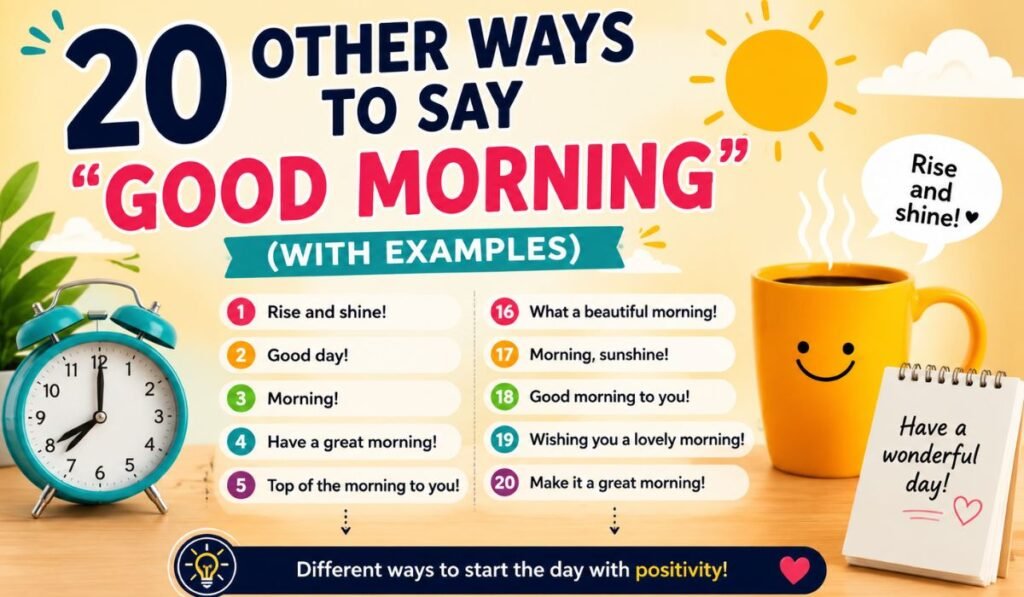
Saying “good morning” is easy. Saying it in a way that actually makes someone smile takes a little more thought. Whether you’re texting a friend, greeting coworkers on Slack, or writing a warm note to someone you love, the right morning greeting sets the tone for the whole day.
This guide breaks down 20 fresh, natural alternatives to “good morning,” when to use them, and how to pick the phrase that fits your situation best.
What Does “Good Morning” Mean?
“Good morning” is a greeting used to acknowledge someone at the start of the day, typically before noon. It’s short for “I wish you a good morning” and carries a simple message: I see you, and I hope your day is off to a good start.
The phrase works in almost any setting — casual or formal, spoken or written. That’s exactly why it’s so common, and also why it can start to feel repetitive if it’s the only greeting you ever use.
Is It Professional/Polite to Say “Good Morning”?
Yes. “Good morning” is one of the safest, most universally polite greetings in the English language. It works in:
- Business emails and meetings
- Customer service interactions
- Job interviews
- Everyday conversations with strangers, coworkers, or clients
It’s neutral, respectful, and appropriate at almost every professional level. The only downside is that it’s so widely used that it can sound generic, especially in written communication like emails or team chats where a little personality goes a long way.
Advantages and Disadvantages
Before you start swapping in new phrases, it helps to understand what “good morning” does well — and where it falls short.
Advantages:
- Universally understood — works across cultures, workplaces, and age groups
- Safe and professional — appropriate for formal and informal settings alike
- Quick and easy — requires no extra thought or context
- Sets a positive tone — a small gesture that signals friendliness
Disadvantages:
- Can feel repetitive — used so often it loses impact over time
- Lacks personalization — doesn’t show extra effort or warmth
- Sounds impersonal in writing — especially in texts or emails to close friends and family
- Doesn’t fit every mood — a playful morning message needs a different tone than a formal one
Why You Need Alternatives
Relying on the same greeting every day can make your communication feel flat. Alternatives to “good morning” help you:
- Match the tone of the relationship (formal, casual, romantic, playful)
- Stand out in a crowded inbox or group chat
- Show genuine effort and personality
- Adapt to different platforms, like texts, emails, or social media captions
- Avoid sounding like a scripted or automated message
A varied vocabulary also makes your writing sound more natural and human, which matters whether you’re chatting with a friend or writing professional copy.
ALSO READ THIS:20 Other Ways to Say “It All Started” (With Examples)
Tips for Choosing the Right Phrase
Not every greeting fits every situation. Keep these tips in mind before you pick one:
- Know your audience. Playful phrases like “Rise and Grind” work with friends, not clients.
- Match the platform. Texts and social captions allow more personality than formal emails.
- Consider the relationship. Save affectionate greetings like “Morning, Beautiful!” for people you’re close to.
- Think about tone. Energetic phrases suit mornings meant to motivate; gentle ones suit quiet, cozy mornings.
- Don’t overdo it. One creative greeting is charming. Five in a row can feel forced.
Full List of Alternatives
Here’s a quick-reference table before the detailed breakdown below.
| # | Phrase | Best For |
| 1 | Morning! | Casual, everyday use |
| 2 | Top of the Morning | Friendly, lighthearted greetings |
| 3 | Rise and Shine | Waking someone up |
| 4 | Good Day | Formal or professional settings |
| 5 | Have a Great Morning | Coworkers, acquaintances |
| 6 | Wishing You a Lovely Morning | Written messages, emails |
| 7 | Bright Morning! | Cheerful, upbeat tone |
| 8 | Wakey Wakey! | Playful, close relationships |
| 9 | Good Morning Sunshine | Family, romantic partners |
| 10 | Morning, Friend! | Friendly and warm |
| 11 | Greetings of the Morning | Formal writing |
| 12 | Hello Sunshine | Affectionate, upbeat |
| 13 | Rise and Grind | Motivational, work/fitness |
| 14 | Morning Greetings | Neutral, general use |
| 15 | Top Morning Wishes | Written cards or messages |
| 16 | Good Day Ahead | Encouraging, forward-looking |
| 17 | Morning Glory | Poetic, cheerful |
| 18 | Hello There! | Casual, flexible |
| 19 | Morning, Beautiful! | Romantic, close friends |
| 20 | Bright and Early | Acknowledging early risers |
1. Morning!
A shortened, casual version of “good morning.” Perfect for quick greetings when you pass someone in the hallway or send a fast text.
Example: “Morning! Did you sleep okay?”
2. Top of the Morning
An Irish-origin phrase that means wishing someone the best part of the day. It’s cheerful and a little old-fashioned, which makes it fun in casual settings.
Example: “Top of the morning to you! Ready for the big day?”
3. Rise and Shine
A classic way to wake someone up or encourage them to get moving. Common between parents and kids, or close friends.
Example: “Rise and shine! Breakfast is ready.”
4. Good Day
A neutral, slightly formal greeting that works any time before noon. It suits professional emails and polite conversations.
Example: “Good day! I hope this message finds you well.”
5. Have a Great Morning
A warm, simple way to wish someone well without sounding overly familiar. Great for coworkers or new acquaintances.
Example: “Have a great morning! See you at the meeting.”
6. Wishing You a Lovely Morning
A gentle, written-friendly greeting that feels thoughtful without being too personal. Ideal for emails, cards, or messages to clients.
Example: “Wishing you a lovely morning and a productive day ahead.”
7. Bright Morning!
An upbeat, energetic greeting that works well when you want to sound cheerful and positive.
Example: “Bright morning! The sun is finally out.”
8. Wakey Wakey!
A playful, affectionate phrase typically used with close friends, partners, or children to gently wake them up.
Example: “Wakey wakey! You’re going to be late.”
9. Good Morning Sunshine
A sweet, affectionate greeting often used with romantic partners, close friends, or family members.
Example: “Good morning sunshine, hope you slept well.”
10. Morning, Friend!
A friendly, casual greeting that adds warmth without being overly intimate. Works well for coworkers you’re friendly with.
Example: “Morning, friend! Coffee’s on if you want some.”
11. Greetings of the Morning
A more formal, slightly poetic alternative suited for written correspondence, speeches, or greeting cards.
Example: “Greetings of the morning to all our valued guests.”
12. Hello Sunshine
A cheerful, affectionate phrase similar to “good morning sunshine,” often used to brighten someone’s mood.
Example: “Hello sunshine! You’re up early today.”
13. Rise and Grind
A motivational phrase popular in fitness and work culture, encouraging someone to get up and get things done.
Example: “Rise and grind — big deadlines today!”
14. Morning Greetings
A simple, neutral phrase that works in both casual and semi-formal contexts, especially in group messages or announcements.
Example: “Morning greetings, everyone! Let’s have a productive day.”
15. Top Morning Wishes
A warm, slightly formal phrase often used in written notes, cards, or messages meant to feel thoughtful.
Example: “Top morning wishes to you and your family.”
16. Good Day Ahead
An encouraging greeting that focuses on the day to come, making it feel motivational and forward-looking.
Example: “Good day ahead! You’ve got this.”
17. Morning Glory
A poetic, cheerful way to greet someone, often used in casual or creative writing.
Example: “Morning glory! What a beautiful sunrise.”
18. Hello There!
A flexible, casual greeting that works any time of day, including mornings, without sounding overly specific.
Example: “Hello there! Hope your morning is going smoothly.”
19. Morning, Beautiful!
An affectionate greeting best reserved for romantic partners or very close friends.
Example: “Morning, beautiful! Can’t wait to see you later.”
20. Bright and Early
A phrase that acknowledges someone waking up or arriving early, often used with a hint of admiration or humor.
Example: “You’re here bright and early today!”
Conclusion
“Good morning” will always be a safe, reliable greeting — but it doesn’t have to be your only one. From playful phrases like “Wakey Wakey!” to formal options like “Greetings of the Morning,” the right words can add warmth, humor, or professionalism to your everyday conversations. Try mixing a few of these into your texts, emails, and daily greetings, and watch how a small change in words can make a big difference in how your message lands.
FAQs
Is “good morning” formal or informal?
It’s neutral — appropriate for both formal and informal situations.
What’s a professional alternative to “good morning”?
“Good day” or “Wishing you a productive morning” work well in professional settings.
Can I use “good morning” all day?
No, it’s best used before noon. After that, “good afternoon” is more appropriate.
What’s a romantic way to say “good morning”?
Try “Morning, Beautiful!” or “Good Morning Sunshine” for partners or loved ones.
Is “morning” alone rude?
No, it’s simply a casual, shortened version often used with friends or coworkers.
What’s a fun way to say “good morning” to kids?
“Rise and Shine” or “Wakey Wakey!” are playful, kid-friendly options.