

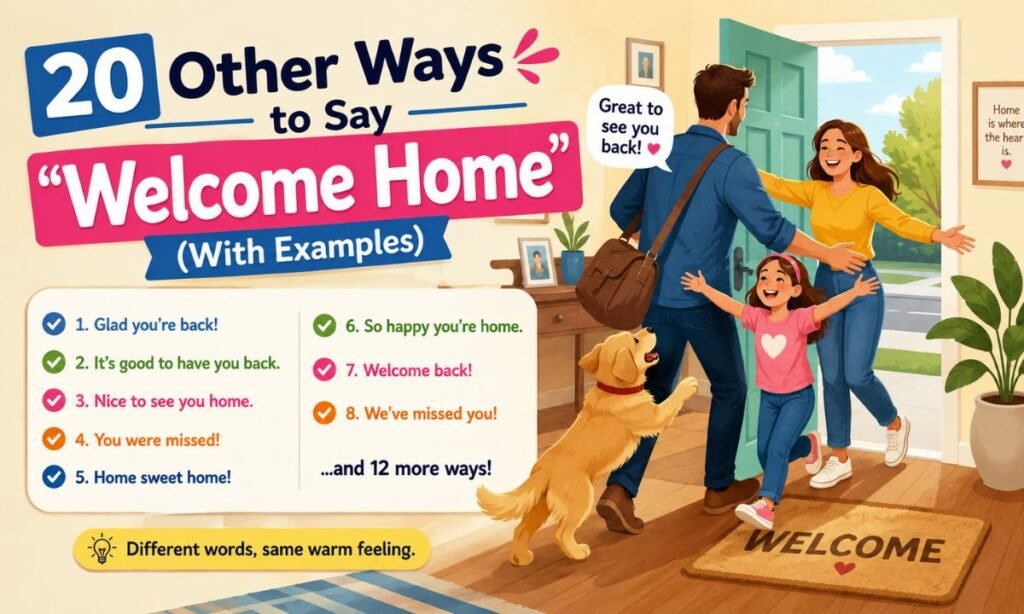
Saying “welcome home” is a small phrase that carries a lot of feeling. But if you say it the same way every time, it can start to sound routine instead of genuine. Whether you’re greeting a family member back from a trip, welcoming a soldier home, or writing a card for a friend who just moved into a new house, the right words can make the moment feel personal instead of generic.
This guide breaks down what “welcome home” really means, when it’s appropriate to use, and 20 warm, natural alternatives you can use instead — each with a real-life example so you know exactly how to use it.
What Does “Welcome Home” Mean?
“Welcome home” is a greeting used to express happiness when someone returns to a familiar place — usually their house, hometown, or a place where they belong. It’s more than a simple hello. It signals relief, love, and a sense of belonging, often after someone has been away for a while, whether that’s a short trip, a deployment, a hospital stay, or a big life change like moving in.
At its core, the phrase communicates two things: “I’m glad you’re back” and “This is where you belong.” That’s why it’s used so widely — from family reunions to workplace onboarding emails that welcome a new hire “home” to the team.
Is It Professional or Polite to Say “Welcome Home”?
Yes, “welcome home” is polite in almost every personal setting. It’s warm, sincere, and universally understood. However, its professionalism depends on context.
- In personal settings (family, friends, neighbors): Always appropriate and often expected.
- In semi-professional settings (a colleague returning from parental leave or a long assignment): Acceptable, but softer alternatives like “welcome back” may feel more workplace-appropriate.
- In formal business writing: “Welcome home” can feel too casual or emotional. Formal alternatives are usually a safer choice.
In short, it’s a polite and heartfelt phrase, but it’s best reserved for situations where warmth and closeness are expected, not strictly professional correspondence.
Why You Need Alternatives to “Welcome Home”
Repeating the same phrase over and over can make even a heartfelt greeting feel flat. Here’s why having alternatives matters:
- Avoids sounding repetitive in cards, speeches, or messages to the same person over time
- Matches the tone of the occasion — a homecoming after military service feels different from a pet coming back from the vet
- Adds personal warmth instead of a generic, one-size-fits-all greeting
- Helps in writing — greeting cards, banners, texts, and social media captions all benefit from variety
- Shows more emotional depth, especially for meaningful returns like recovery, deployment, or reunions after years apart
ALSO READ THIS:20 Other Ways to Say “Got It, Thank You” (With Examples)
Advantages and Disadvantages of Using “Welcome Home”
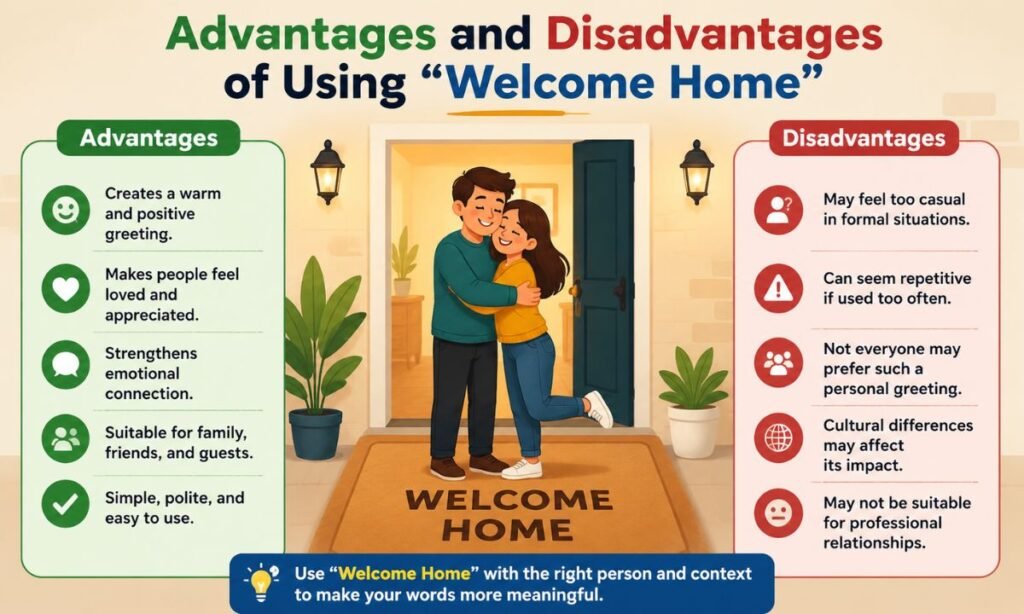
Advantages:
- Instantly recognizable and universally understood
- Warm and emotionally sincere
- Works for almost any homecoming occasion
- Easy to say, write, or put on a banner or card
- Requires no explanation — the meaning is immediate
Disadvantages:
- Can sound overused or generic, especially in cards and banners
- May feel impersonal if not paired with specific details
- Doesn’t always fit lighter or more casual reunions (like a pet coming home)
- Can feel too casual for professional or formal contexts
- Doesn’t capture nuance — like relief, pride, or long-awaited joy
Tips for Choosing the Right Phrase
- Match the tone to the occasion. A phrase for a returning soldier should feel different from one for a roommate back from vacation.
- Consider the relationship. Close family and friends can handle more emotional language; coworkers may prefer something simpler.
- Think about the format. A banner needs a short, punchy phrase. A card or letter can hold something longer and more personal.
- Add a personal detail. Mentioning how much they were missed, or what changed while they were gone, makes any phrase feel more genuine.
- Read it out loud. If it sounds natural when spoken, it will likely read naturally too.
Full List of Alternatives
| # | Alternative Phrase | Best For |
| 1 | It’s good to have you back home | Family reunions |
| 2 | Home feels complete again | Emotional homecomings |
| 3 | You’ve been missed here | Friends, coworkers |
| 4 | So glad you’re back | Casual, everyday returns |
| 5 | The house feels alive again | After a long absence |
| 6 | It feels right having you here again | Close relationships |
| 7 | You’re finally back where you belong | Long-awaited returns |
| 8 | We’re happy you’re home again | General use |
| 9 | Home is brighter with you in it | Warm, affectionate tone |
| 10 | It’s wonderful to see you back | Formal or semi-formal |
| 11 | You make this place feel like home | Roommates, partners |
| 12 | Everything feels right again | Emotional reunions |
| 13 | It’s so good to have you back under this roof | Family-focused |
| 14 | We’ve been waiting for you | Anticipated arrivals |
| 15 | You bring warmth wherever you go, especially home | Heartfelt, personal notes |
| 16 | The family is whole again | Multi-person households |
| 17 | It’s a joy to have you back | Cards and messages |
| 18 | Nothing feels the same without you | Deeply emotional returns |
| 19 | Home just got a little happier | Light, cheerful tone |
| 20 | We missed this — having you here | Casual and sincere |
1. It’s good to have you back home

This is a simple, sincere way to greet someone without sounding overly formal. It works well for both family and close friends.
Example: “It’s good to have you back home, Dad. The kids have been asking about you all week.”
2. Home feels complete again
Use this when someone’s absence was clearly felt by everyone in the house. It’s emotional without being over the top.
Example: “Home feels complete again now that you’re back from your trip.”
3. You’ve been missed here
A flexible option that works for coworkers, roommates, or extended family. It’s warm but not overly intimate.
Example: “You’ve been missed here — the office just wasn’t the same without you.”
4. So glad you’re back
Short, casual, and easy to use in texts or quick conversations.
Example: “So glad you’re back! Let’s catch up this weekend.”
5. The house feels alive again
This phrase adds a bit of imagery, making it feel more personal and descriptive than a standard greeting.
Example: “The house feels alive again now that you’re home from college.”
6. It feels right having you here again
A gentle way to express that things are back to normal, ideal for close relationships.
Example: “It feels right having you here again — like a piece was missing.”
7. You’re finally back where you belong
Perfect for long-awaited homecomings, such as after military deployment or an extended stay abroad.
Example: “You’re finally back where you belong. We’re so proud of you.”
8. We’re happy you’re home again
A safe, all-purpose option that suits almost any homecoming, from a short trip to a longer absence.
Example: “We’re happy you’re home again — dinner’s almost ready.”
9. Home is brighter with you in it
A poetic, affectionate phrase that works beautifully in cards or heartfelt messages.
Example: “Home is brighter with you in it. Welcome back, sweetheart.”
10. It’s wonderful to see you back
Slightly more formal, making it a good fit for semi-professional or extended-family settings.
Example: “It’s wonderful to see you back after your recovery. You look great.”
11. You make this place feel like home
Ideal for partners or roommates, expressing that their presence — not just the physical space — is what makes it feel right.
Example: “You make this place feel like home. I’m glad you’re back.”
12. Everything feels right again
A simple but powerful line that communicates relief and comfort.
Example: “Everything feels right again now that you’re here.”
13. It’s so good to have you back under this roof
A slightly more traditional phrase, great for multi-generational or family-centered homes.
Example: “It’s so good to have you back under this roof, Grandma.”
14. We’ve been waiting for you
Great for surprise homecomings or when the family has been counting down the days.
Example: “We’ve been waiting for you all day — welcome home!”
15. You bring warmth wherever you go, especially home
A heartfelt, slightly poetic line best suited for cards or written messages rather than casual speech.
Example: “You bring warmth wherever you go, especially home. We love you.”
16. The family is whole again
Best used when someone’s return completes the household, such as after military service or a long work trip.
Example: “The family is whole again now that you’re back, honey.”
17. It’s a joy to have you back
A polished, sincere phrase that works well in cards, speeches, or formal-ish greetings.
Example: “It’s a joy to have you back with us this holiday season.”
18. Nothing feels the same without you
A deeply emotional line best reserved for close relationships and meaningful homecomings.
Example: “Nothing feels the same without you — I’m so glad you’re finally back.”
19. Home just got a little happier
A light, cheerful option that suits everyday returns without feeling too heavy.
Example: “Home just got a little happier now that you’re back from your trip.”
20. We missed this — having you here
Casual and genuine, this phrase works well in texts, notes, or quick greetings.
Example: “We missed this — having you here makes everything better.”
Frequently Asked Questions
Is “welcome home” too casual for a workplace email?
It can feel casual for formal business writing. “Welcome back” is usually safer for professional emails.
What’s a good alternative for a returning soldier?
You’re finally back where you belong” or “The family is whole again” both work well for military homecomings.
Can I use these phrases on a banner?
Yes. Shorter options like “So glad you’re back” or “Home just got a little happier” work best for banners and signs.
What should I write in a welcome home card?
Choose a phrase that matches your relationship, like “It’s a joy to have you back” for close family or “You’ve been missed here” for coworkers.
Are these alternatives suitable for pets coming home?
Lighter phrases like “Home feels complete again” or “So glad you’re back” work well for pets returning from the vet or boarding.
Conclusion
“Welcome home” will always be a heartfelt phrase, but it doesn’t have to be your only option. Whether you’re writing a card, planning a banner, or simply greeting someone at the door, choosing the right words can make the moment feel more personal and meaningful. Use this list to match your tone, your relationship, and the occasion — and make every homecoming feel special.