

Choosing the correct spelling can be confusing when two words look and sound almost the same.
If you have seen both “repore” and “rapport,” you may wonder which one is actually correct.
This guide explains the difference in simple and clear English.
Repore or Rapport: Which Spelling Is Correct? (Guide 2026) Meaning is a common question for people checking the right word.
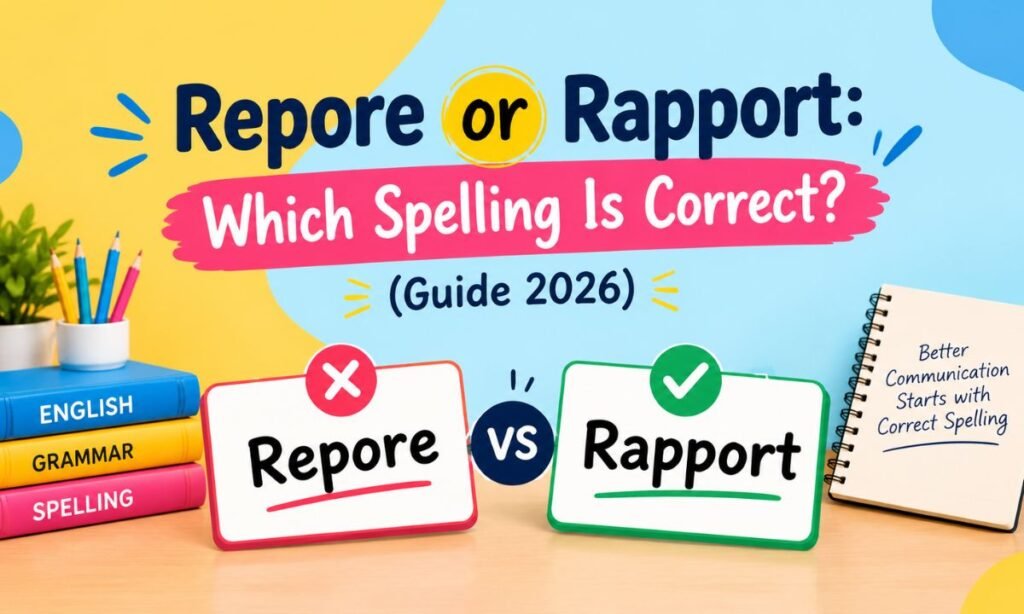
The correct spelling is rapport, which refers to a friendly, comfortable, and positive relationship between people.
“Repore” is a common misspelling of the word “rapport.”
In this guide, we will explain what rapport means and how to use it correctly in a sentence.
You will also learn why “repore” appears online and how the two spellings differ.
Simple examples will help you remember the correct spelling.
By the end of this article, you will clearly understand Repore or Rapport: Which Spelling Is Correct? (Guide 2026) Meaning.
Whether you are writing an email, article, school assignment, or professional message, using the right spelling matters.
Let’s look at the meaning, pronunciation, examples, and correct usage of “rapport.”
Repore or Rapport – Quick Answer
Rapport is the only correct spelling. It’s a noun that means a close, trusting connection between two people. You’ll hear it in job interviews, therapy sessions, sales calls, and classrooms.
“Repore” shows up because people spell words the way they sound. Say rapport out loud and it comes out as “ra-POUR.” Your brain wants to write it that way too. That’s the whole trap.
Here’s the fast rule you can keep in your head:
- ✅ Rapport = correct, always
- ❌ Repore = incorrect, never
- ❌ Repoire, rapore, raport, repor = also wrong
Bookmark this trick if nothing else: RA + double P + ORT = RAPPORT. Two P’s, no exceptions.
The Origin of Repore or Rapport
Rapport didn’t start in English at all. It’s a French loanword, and that’s the whole reason the spelling feels off compared to how you say it.
English pulled the word from French sometime around the 17th century. The French verb rapporter means “to bring back” or “to relate.” Over time, the noun came to mean a bond between people, a sense that you understand each other.
When English borrows a word like this, it often keeps the original spelling instead of respelling it to match English sound rules. That’s exactly what happened here. French words carry silent letters and spelling patterns that don’t map onto English pronunciation, and rapport is a textbook example.
A few other French loanwords do the same thing to English speakers:
- Ballet (silent T)
- Buffet (silent T)
- Rendezvous (barely recognizable from how it’s said)
Once you see rapport as part of that family, the “weird” spelling stops feeling random. It’s just French doing what French does inside English.
British English vs American English Spelling
Here’s some good news if you split your writing between UK and US audiences: there’s no split on this one.
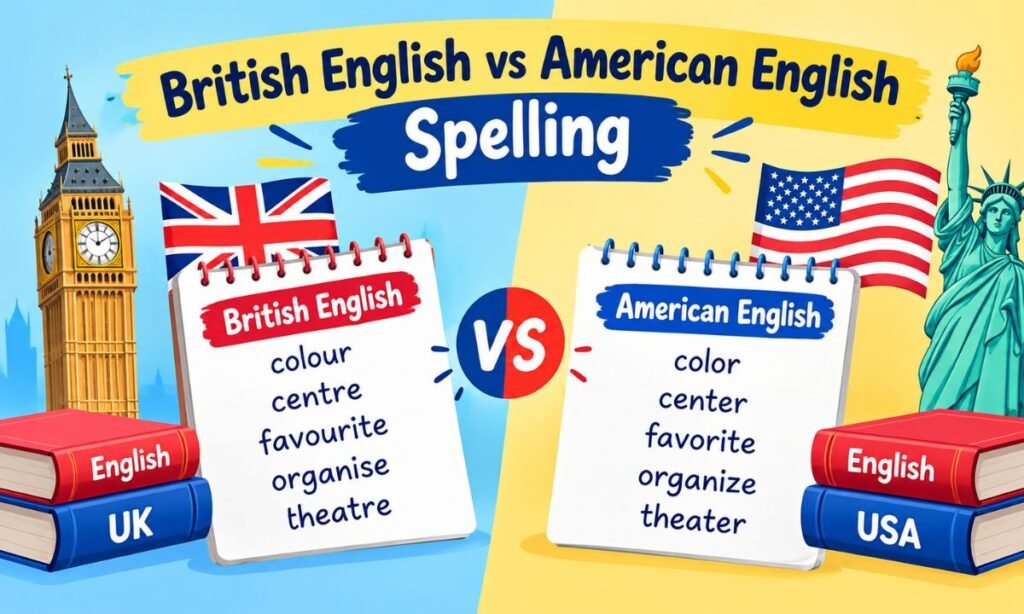
Rapport is spelled the exact same way in British English and American English. No extra U, no swapped letters, nothing. Compare that to words like:
| Word Type | British English | American English |
|---|---|---|
| Color words | colour | color |
| -ise/-ize verbs | organise | organize |
| Rapport | rapport | rapport |
Pronunciation shifts a little between regions. British speakers often drop the final “t” sound more sharply, while American speakers may pronounce it closer to “ruh-POR.” Either way, the spelling stays locked.
So if you’re writing for a client in London and one in Los Angeles, you don’t need two versions of this word. One spelling covers both.
ALSO READ “CBFW Meaning in Text: The Ultimate “
Which Spelling Should You Use?
Always use rapport. There is no situation, formal or casual, where “repore” is the accepted spelling.
Use rapport when you’re talking about:
- Building rapport with a new client or customer
- A teacher who has good rapport with students
- A doctor establishing rapport with a nervous patient
- Rapport-building questions in a job interview
- A sales rep working to create trust and connection with a lead
It fits both professional communication and everyday conversation. You’ll see it in resumes, LinkedIn posts, therapy notes, teaching guides, and customer service training. It’s never downgraded to “informal” or “casual only.”
If you’re ever unsure mid-sentence, swap in a simpler phrase like “good relationship” or “trust” while you double check the spelling. That buys you a second to get it right without leaving a typo in a professional email.
Common Mistakes with Repore or Rapport
Most people don’t mean to misspell this word. It happens because of how the brain processes sound versus spelling. Here are the patterns that trip writers up most:
- Spelling it phonetically. Since rapport sounds like “ra-pore,” writers guess “repore” without checking.
- Dropping a letter under time pressure. Fast typing in emails or texts often produces “repor” or “raport.”
- Autocorrect doesn’t always catch it. Some tools flag “repore” as a possible name or leave it alone, so the error slips through.
- Confusing it with similar-sounding words. Report, repair, and rapport all share sounds, and tired brains blend them.
- Learning the word by ear first. A lot of people hear rapport in a meeting or class before they ever see it written, so the spelling never gets locked in.
A simple fix: read your sentence out loud after you type it, then look at the word on the screen and check for the double P. That one detail catches most of the mistakes above.
Repore or Rapport in Everyday Examples
Seeing the word in real sentences helps more than any rule does. Here are side-by-side comparisons you can use as a reference:
Workplace:
- ❌ She built quick repore with the new hires.
- ✅ She built quick rapport with the new hires.
Customer service:
- ❌ Our reps focus on repore before pitching anything.
- ✅ Our reps focus on rapport before pitching anything.
Education:
- ❌ The teacher had strong repore with the whole class.
- ✅ The teacher had strong rapport with the whole class.
Healthcare:
- ❌ The nurse worked to establish repore with the patient.
- ✅ The nurse worked to establish rapport with the patient.
Job interviews:
- ❌ Try to build repore with the interviewer early on.
- ✅ Try to build rapport with the interviewer early on.
Notice the pattern. Swap “repore” for “rapport” and the sentence instantly reads as correct, professional writing.
Repore or Rapport – Google Trends & Usage Data
People search for this spelling mix-up constantly, and it’s not a small niche group. Search terms like “repore or rapport,” “how do you spell repore,” and “repore spelling” show up because the word gets used in speech far more than it gets written.
A few patterns tend to hold true when this kind of misspelling gets tracked:
- Search interest tends to climb around job-hunting seasons, when people are polishing resumes and cover letters.
- Writing tools and grammar checkers report this as one of the more common French-loanword mix-ups in business English.
- Workplace, therapy, and education contexts drive most of the confusion, since that’s where the word gets spoken most often before it’s written.
The takeaway: this isn’t a rare mistake you should feel bad about. It’s one of the more common French-origin spelling traps in English, right up there with words like “restaurant” and “entrepreneur.”
Comparison Table: Keyword Variations
Here’s a quick reference table covering every variation people search for, plus the correct answer for each one.
| Search Term / Variation | Correct Spelling? | Notes |
|---|---|---|
| Repore | ❌ No | Common phonetic misspelling |
| Repoire | ❌ No | Blend of repore and rapport |
| Rapore | ❌ No | Missing a P |
| Raport | ❌ No | Missing a P, closer to French |
| Repor | ❌ No | Truncated, missing letters |
| Repour | ❌ No | Confused with “pour” |
| Rapport | ✅ Yes | The only correct English spelling |
| Good repore | ❌ No | Should read “good rapport” |
| Build repore | ❌ No | Should read “build rapport” |
| Rapport building | ✅ Yes | Correct compound usage |
Save this table if you write a lot of client-facing content. It covers nearly every variation that shows up in search bars and first drafts.
FAQs
Is “repore” ever correct in any context? No. It’s not a recognized word in any English dictionary, formal or informal.
Why does rapport sound different from how it’s spelled? It’s a French loanword, and English kept the French spelling instead of respelling it phonetically.
Is rapport spelled differently in British vs American English? No, the spelling is identical in both. Only pronunciation shifts slightly.
What does “build rapport” mean? It means creating trust and a comfortable connection with someone, often used in sales, teaching, or interviews.
Is “repore” a typo or a real alternate spelling? It’s a typo based on pronunciation, not an accepted alternate spelling.
How do I remember the correct spelling? Use the trick RA + double P + ORT. The double P is the part most people forget.
Can autocorrect fix “repore” automatically? Not always. Some tools miss it since it looks like it could be a name, so a manual check is still worth doing.
Conclusion
The answer never changes: rapport is correct, and repore is a common misspelling built on how the word sounds rather than how it’s written. It’s a French loanword that kept its original spelling, which is exactly why it trips up so many careful writers.
Keep the double-P trick handy the next time you’re writing an email, a resume line, or a note about building rapport with a client. One quick check before you hit send saves you from a typo that’s easy to avoid once you know the rule. 😊