

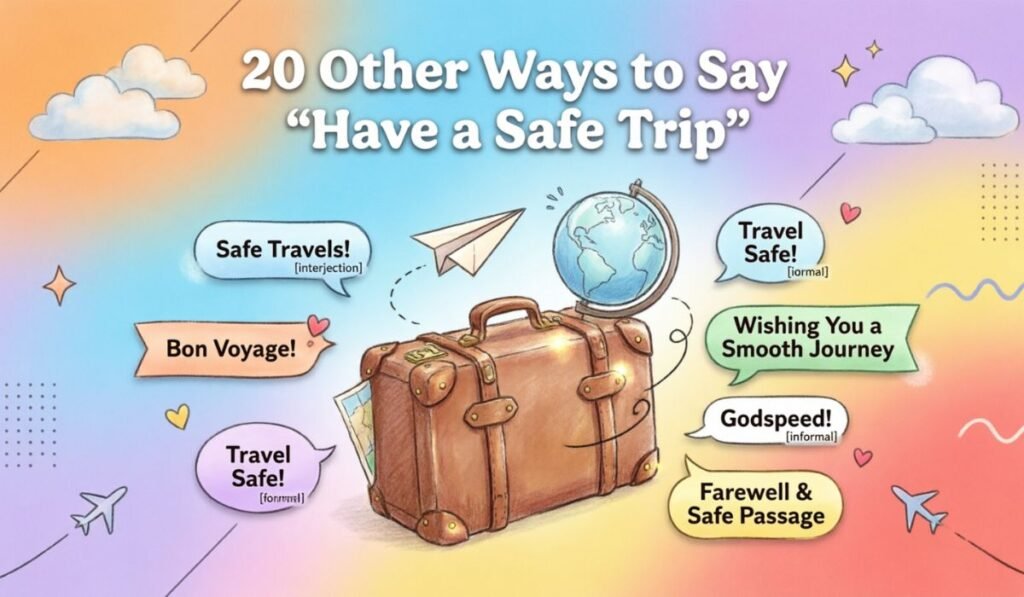
Saying goodbye before a trip should feel warm, not repetitive. If you keep typing “have a safe trip” in every text, card, or email, it starts to sound flat, even when you mean every word of it. This guide walks through 20 heartfelt alternatives you can use for a friend, a coworker, or family member heading out the door, plus tips on picking the right one for the moment.
You will also find the meaning behind each phrase, real example lines you can copy straight into a message, and a quick breakdown of when each one fits best. By the end, sending someone off will feel personal again instead of routine.
What Does “Have a Safe Trip” Mean?

“Have a safe trip” is a short, caring send-off. It tells someone you hope their journey goes smoothly and that they arrive without trouble, whether they are driving two hours or flying across the world.
The phrase works because it is simple. It does not need context about the destination or the reason for travel. You can say it to a coworker heading to a conference or a sibling driving home for the holidays, and it lands the same way both times.
At its core, the phrase carries three things: care, a wish for safety, and good will for the road ahead. That is why it shows up so often in texts, cards, and quick goodbyes at the airport.
Is It Professional/Polite to Say “Have a Safe Trip”?
Yes, it is both polite and workplace-appropriate. You can say it to a boss, a client, or a new coworker without it sounding too casual or too stiff.
It works because the phrase does not lean too far in either direction. It is warm enough for family and neutral enough for the office. That balance is rare, and it is part of why the phrase has stuck around for so long.
That said, using it constantly in a professional setting, like a company-wide email before a work trip, can start to sound like a template. Swapping in a thoughtful alternative now and then shows a little more effort and personality.
Advantages and Disadvantages
Every farewell phrase has a upside and a downside. Here is a quick look at where “have a safe trip” shines and where it falls short.
| Aspect | Advantage | Disadvantage |
| Tone | Works for both formal and informal settings | Can feel generic if overused |
| Length | Short and easy to say or type | Lacks personal detail |
| Clarity | Universally understood | Does not specify mode of travel |
| Emotion | Conveys genuine concern | Can sound like a habit rather than a feeling |
The biggest issue is not the phrase itself. It is repetition. Saying the exact same four words to every single person, every single time, is what drains the warmth out of it.
Why You Need Alternatives to “Have a Safe Trip”
Think about how many farewell texts you send in a year. If they all read the same, the people closest to you stop noticing them. A fresh phrase, even a small change like “safe travels” or “journey well,” makes the message feel intentional again.
Alternatives also let you match the tone of the trip. A road trip with your best friend calls for something playful. A business trip for your manager calls for something polished. One default phrase cannot cover both.
There is also a practical reason. Repeating the same sentence across cards, emails, and social posts can look copied or lazy, especially if you are writing for a business, a newsletter, or a group message. Variety keeps your writing sounding human.
Finally, the right words can genuinely lift someone’s mood before they leave. A little warm farewell goes further than people expect, especially before a stressful trip like a flight delay or a long drive.
Tips for Choosing the Right Phrase
Picking the right send-off is not complicated, but a few quick checks make a big difference.
● Match the relationship. Close friends and family can handle playful or affectionate phrases. Coworkers and clients do better with polished, workplace-appropriate language.
● Match the trip type. A flight, a road trip, and a cruise all call for slightly different wording. “Have a safe flight” hits different than “safe travels on the road.”
● Match the channel. A text can be short and casual. A card or farewell message at work can carry a bit more warmth and detail.
● Keep it sincere. Do not stretch for a fancy phrase if it does not sound like you. A short, honest line beats a long, stiff one every time.
● Read it out loud. If it sounds awkward coming out of your mouth, it will read awkward in text too.
Full List of Alternatives

Here is a quick-reference table before the full breakdown below. Use it to scan for tone and pick fast.
| # | Phrase | Tone | Best For |
| 1 | Travel Safely | Neutral | Everyday goodbyes |
| 2 | Safe Travels | Neutral | Any trip, any relationship |
| 3 | Bon Voyage | Playful/Formal | International trips |
| 4 | Journey Well | Warm | Close friends, family |
| 5 | Wishing You a Safe Journey | Formal | Business, professional emails |
| 6 | Have a Smooth Trip | Casual | Road trips, flights |
| 7 | Travel Well | Neutral | General farewells |
| 8 | Have a Pleasant Trip | Formal | Customer-facing, polite emails |
| 9 | Godspeed | Old-fashioned/Warm | Meaningful, longer trips |
| 10 | Safe Journey | Neutral | Any travel type |
| 11 | Take Care on the Road | Casual | Driving trips |
| 12 | Enjoy Your Trip | Upbeat | Vacations, leisure travel |
| 13 | Have a Great Journey | Warm | Family, friends |
| 14 | Travel Safely and Well | Detailed | Longer or riskier trips |
| 15 | Journey Safely | Neutral | General use |
| 16 | Have a Safe Flight | Specific | Air travel only |
| 17 | Safe Travels Ahead | Encouraging | Trips with unknowns |
| 18 | Keep Safe on Your Trip | Caring | Close relationships |
| 19 | Wishing You a Smooth Journey | Formal/Warm | Business or personal |
| 20 | Have a Wonderful Trip | Cheerful | Vacations, celebrations |
Now let’s go through each one in detail.
1. Travel Safely
Meaning: A direct, simple wish for someone’s safety on the road, in the air, or anywhere else.
This one skips the word “trip” entirely and focuses on the action itself. It works well in texts because it is short enough to type in two seconds but still feels personal.
Examples:
● Travel safely and text me when you land.
● Travel safely, and give your mom a hug for me.
● Travel safely out there, the roads look busy today.
2. Safe Travels
Meaning: One of the most common safe travels variations, used the same way as the original phrase but slightly more polished.
It suits almost any audience, from a close friend to a client you barely know. That flexibility is exactly why it shows up so often in professional emails and casual texts alike.
Examples:
● Safe travels, see you at the reunion!
● Safe travels this weekend, drive carefully.
● Safe travels and good luck with the interview.
3. Bon Voyage
Meaning: A French phrase meaning “good journey,” often used for longer or international trips.
It carries a bit of flair and works well for cruises, overseas flights, or big life moves. It can feel a touch formal or old-fashioned in everyday texting, so save it for bigger send-offs.
Examples:
● Bon voyage! Send pictures from Paris.
● Bon voyage on your first solo trip abroad.
● Bon voyage, and enjoy every second of the cruise.
4. Journey Well
Meaning: A warm, slightly poetic way to wish someone a good trip, focused on the experience rather than just safety.
This phrase fits well in a card or a heartfelt message rather than a quick text. It sounds thoughtful without trying too hard.
Examples:
● Journey well, my friend. I’ll be thinking of you.
● Journey well and take it all in.
● Journey well, and come back with good stories.
5. Wishing You a Safe Journey
Meaning: A formal, complete sentence version that works well in professional emails or written cards.
This is one of the safest choices for a business trip email because it sounds thoughtful without becoming too personal. It is a strong pick when you want to sound sincere but still keep some distance.
Examples:
● Wishing you a safe journey as you head to the conference.
● Wishing you a safe journey and a productive meeting.
● Wishing you a safe journey home after a long week.
6. Have a Smooth Trip
Meaning: Focuses on ease and comfort rather than just physical safety, hoping the traveler avoids delays, traffic, or stress.
This phrase fits flights and road trips especially well, since those are the trips most likely to hit bumps like delays or detours.
Examples:
● Have a smooth trip, no traffic today hopefully.
● Have a smooth trip and an easy landing.
● Have a smooth trip, the roads should be clear this early.
7. Travel Well
Meaning: A short, neutral phrase that works for almost any farewell, formal or casual.
It sounds natural whether you are texting a friend or signing off a work email. It is a good default when you are not sure what tone to use.
Examples:
● Travel well and let me know when you’re home.
● Travel well, safe flights all the way.
● Travel well, we’ll catch up when you’re back.
8. Have a Pleasant Trip
Meaning: A more polished, refined version of the original phrase, often used in customer-facing or formal settings.
Hotels, travel agencies, and customer service teams use this one often. It sounds polite without being personal, which makes it a solid choice for strangers or acquaintances.
Examples:
● Have a pleasant trip, and thank you for booking with us.
● Have a pleasant trip and enjoy your stay.
● We wish you a pleasant trip home.
9. Godspeed
Meaning: An old-fashioned way of wishing someone luck and safety, originally meaning “may God grant you success.”
It carries weight, so it fits big send-offs better than everyday goodbyes. Think long journeys, big moves, or moments that feel significant rather than routine.
Examples:
● Godspeed on your journey across the country.
● Godspeed, and good luck with the new job on the other side.
● Godspeed, friend. See you when you’re back.
10. Safe Journey
Meaning: A close cousin of “safe travels,” slightly more formal and slightly more common outside the US.
It works in nearly every context, from a quick goodbye at the door to a formal email. Short, sincere, and easy to say out loud.
Examples:
● Safe journey, call me when you arrive.
● Safe journey and enjoy the scenery along the way.
● Safe journey home, drive carefully.
11. Take Care on the Road
Meaning: A phrase built specifically for driving trips, focused on road safety rather than travel in general.
This one only really fits car trips, so save it for road trips rather than flights or cruises. It sounds caring without being overly formal.
Examples:
● Take care on the road, the weather looks rough tonight.
● Take care on the road and stop if you get tired.
● Take care on the road, see you this weekend.
12. Enjoy Your Trip
Meaning: Shifts the focus away from safety and toward having a good time, best used for vacations or leisure travel.
If someone is heading off on a relaxing trip rather than a stressful one, this phrase matches the mood better than a safety-focused line.
Examples:
● Enjoy your trip, you’ve earned this vacation.
● Enjoy your trip and try the local food for me.
● Enjoy your trip, can’t wait to see the pictures.
13. Have a Great Journey
Meaning: A warm, upbeat phrase that wishes someone both safety and a genuinely good experience.
It works well for family and friends heading somewhere exciting, like a wedding, a reunion, or a long-awaited vacation.
Examples:
● Have a great journey, and give everyone my love.
● Have a great journey, you deserve this trip.
● Have a great journey, see you when you’re back.
14. Travel Safely and Well
Meaning: A fuller version that combines safety with overall well-being, often used for longer or more demanding trips.
This phrase feels more detailed than a quick “safe travels,” which makes it a good fit for trips you know will be tiring or long.
Examples:
● Travel safely and well, that’s a long flight ahead of you.
● Travel safely and well, rest when you need to.
● Travel safely and well, we’ll see you at the airport.
15. Journey Safely
Meaning: A simple rearrangement of “safe journey” that still carries the same warmth and sincerity.
It is neutral enough to use with almost anyone, similar to “safe travels” or “safe journey,” and it reads a little less common, which can make it stand out.
Examples:
● Journey safely, and text me your flight number.
● Journey safely, we’re excited to see you soon.
● Journey safely out there, the storm should pass by morning.
16. Have a Safe Flight
Meaning: A specific version built only for air travel, used when you know the trip involves a plane.
Being specific shows you are paying attention to the actual details of someone’s trip, not just sending a generic line.
Examples:
● Have a safe flight, text me when you land.
● Have a safe flight and grab some snacks for the layover.
● Have a safe flight, hope there’s no turbulence.
17. Safe Travels Ahead
Meaning: Adds a forward-looking feel, useful for trips with a lot of unknowns, like a multi-city trip or an open-ended journey.
It suggests more than one leg of travel, which makes it a strong fit for longer itineraries rather than a single short trip.
Examples:
● Safe travels ahead, that’s quite the itinerary.
● Safe travels ahead, and enjoy every stop along the way.
● Safe travels ahead, keep us posted on where you end up.
18. Keep Safe on Your Trip
Meaning: A caring, slightly protective phrase best suited for close relationships like family or close friends.
It reads a bit more personal than most alternatives here, which makes it a strong choice when you genuinely want the message to feel affectionate.
Examples:
● Keep safe on your trip, and call your dad when you land.
● Keep safe on your trip, we’ll miss you around here.
● Keep safe on your trip, especially with all that driving.
19. Wishing You a Smooth Journey
Meaning: A formal but caring phrase that blends the polish of “wishing you” with the ease-focused word “smooth.”
This works well for both business trips and personal travel, especially in written messages like emails or cards rather than quick texts.
Examples:
● Wishing you a smooth journey and a successful trip.
● Wishing you a smooth journey home after the conference.
● Wishing you a smooth journey, see you next week.
20. Have a Wonderful Trip
Meaning: A cheerful, upbeat send-off best suited for vacations, celebrations, or trips someone has been looking forward to.
It leans fully into excitement rather than safety, so it fits happy occasions better than stressful or urgent travel.
Examples:
● Have a wonderful trip, you’ve been planning this for months.
● Have a wonderful trip and relax as much as you can.
● Have a wonderful trip, can’t wait to hear all about it.
How to Personalize These Phrases
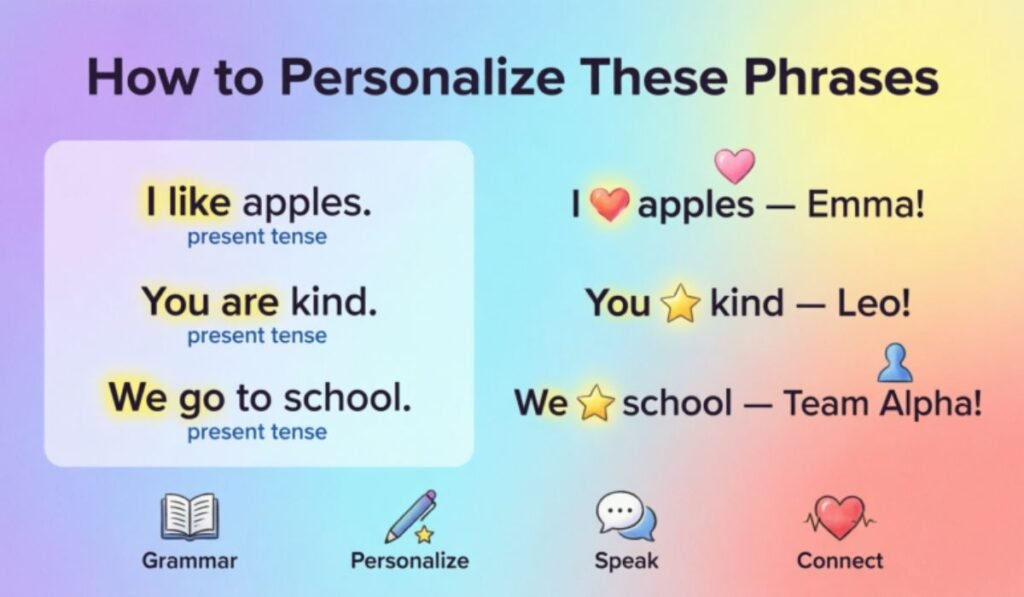
A phrase from a list only goes so far. Adding one small personal detail turns any of these lines into something that actually sounds like you.
● Add a shared memory. “Travel safely, just like our old road trips” feels different than a plain goodbye.
● Reference the destination. Naming the city or event shows you were actually listening when they told you about the trip.
● Add a follow-up request. “Text me when you land” or “call when you get there” turns a wish into an ongoing connection.
● Match their humor. If your friend group jokes around, a playful twist on “safe travels” will land better than a formal line.
● Keep tone consistent with the relationship. Do not suddenly get formal with someone you always text casually. It reads as distant rather than polished.
Choosing Based on Who You’re Talking To
The same phrase does not work equally well for every person in your life. Here is a fast way to sort it out.
| Relationship | Good Fit | Avoid |
|---|---|---|
| Close friend or partner | Journey well, keep safe on your trip | Overly formal phrases like “wishing you a safe journey” |
| Coworker or client | Wishing you a safe journey, have a pleasant trip | Playful or joking phrases |
| Parent or older relative | Safe travels, travel safely and well | Slang-heavy alternatives |
| Acquaintance | Safe travels, have a great journey | Overly personal or affectionate lines |
Frequently Asked Questions
Is “safe travels” more common than “have a safe trip”?
Yes, both are common, but “safe travels” is used slightly more often in professional writing.
Can I use these phrases in a work email?
Yes, especially the more formal ones like “wishing you a safe journey” or “have a pleasant trip.”
Which phrase works best for a flight specifically?
“Have a safe flight” is the clearest choice since it names the mode of travel directly.
Is “bon voyage” still used today?
Yes, though it is more common for bigger trips like international travel or cruises.
What is the most casual option on this list?
“Take care on the road” and “enjoy your trip” both read as relaxed and informal.
Can I combine two phrases together?
Yes, phrases like “travel safely and well” show that combining ideas can sound natural.
Final Thoughts
Sending someone off does not need a long speech, just the right few words for the moment. Whether it is a safe journey text to a sibling or a wishing you a safe journey line in a work email, small changes in wording keep your goodbyes feeling genuine instead of routine.
Try picking two or three of these phrases to keep in your back pocket, one casual, one formal, and one just for the people closest to you. The next time someone heads out the door, you will already know exactly what to say.